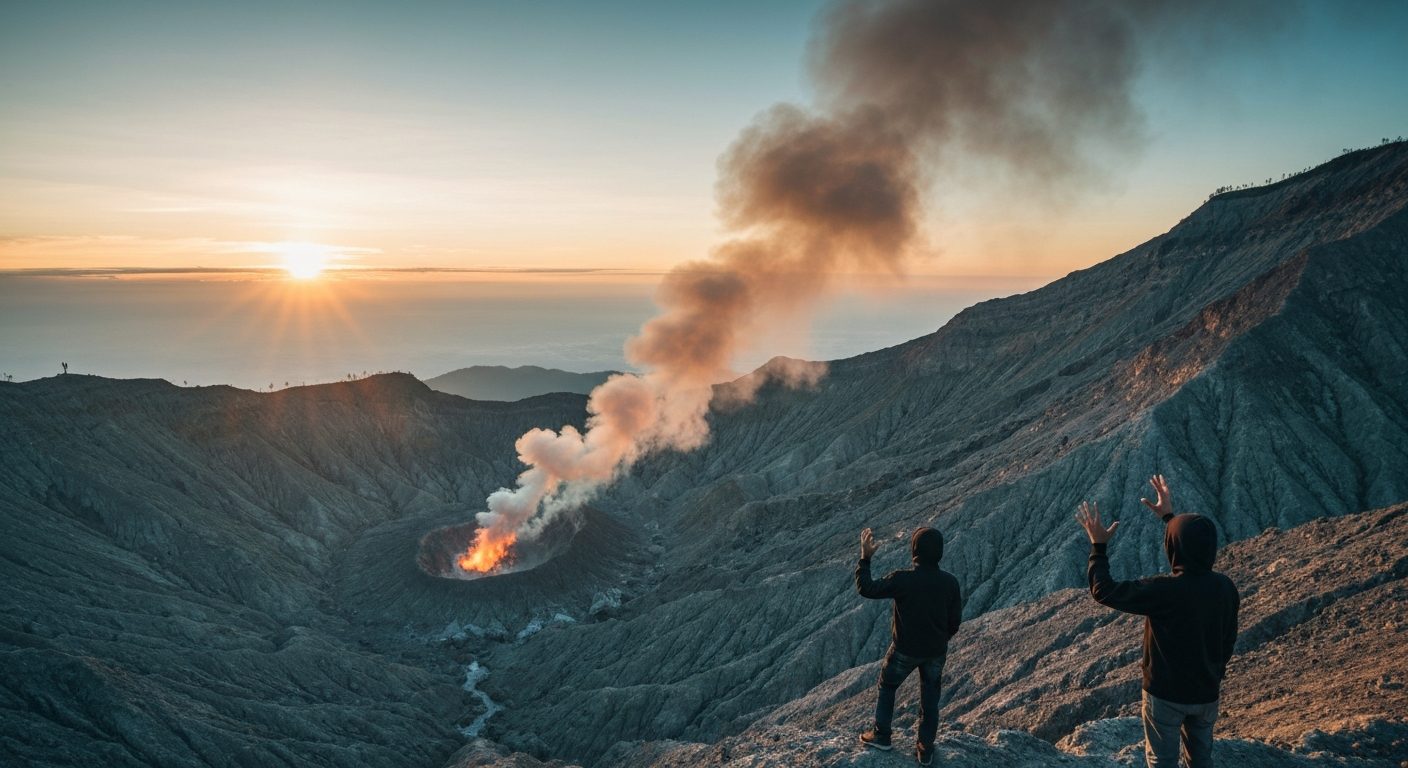
ijen best season to visit Kawah Ijen’s blue fire and crater is the dry season months from May to September, when trails are usually firmer and skies clearer. The best time to visit Ijen blue fire on any given night, however, also depends on moon phase, recent rain, wind, and how sensitive you are to cold and sulfur gas.
I’m Anindya, Ijen Trek & Mountain Editor at Ijen Tour Package, operated by Bali Premium Trip. I’ve walked that dark volcanic path to Kawah Ijen’s rim well over a hundred times now, in both sandals-and-dust dry season and ankle-deep mud after a night of January rain. This guide is the version I wish first-time hikers planning for 2026 could read before locking in flights and dates.
You’ll find:
- Dry vs. wet season trade-offs (honest pros and cons — not just “go in August”)
- Month-by-month Ijen weather and visibility expectations
- How full moon vs. new moon affects the blue flames
- Peak-season July–August crowd patterns and how to dodge them
- Timing tips if you’re coming from Bali, or combining Ijen with Bromo
All of this is grounded in real trail experience plus public climate data; conditions still change year to year, and nothing is guaranteed in the mountains. But this should give you a clear frame for picking the right night, not just the right month.
—
Quick overview: Ijen seasons and what they mean for you
Kawah Ijen sits in East Java, with a trailhead at roughly 1,850 m and the crater rim around 2,350 m. That altitude makes nights cooler than Bali and gives you a clear split between:
- Dry season (roughly May–September)
Firmer trails, lower rain probability, better sunrise odds. Also: more people, higher demand for guides, hotels and transport.
- Wet season (roughly November–March)
More rain, higher chance of low cloud and fog, but also fewer crowds and greener slopes. Sulfur gas can linger longer on still, humid nights.
There is no single “perfect” month. Instead, you trade off:
- Visibility vs. crowds
- Trail safety vs. mud and slipperiness
- Blue-fire contrast vs. moonlight and cloud
—
Dry season vs. wet season: how it really feels on the trail
Dry season (May–September): the Ijen tour best season for most hikers
On balance, the dry months are the ijen best season to visit for most first-timers who want blue fire and crater views in one go.
What usually improves in dry season:
- Trail condition
The 3 km climb to the rim is still steep (expect 1.5–2 hours up at a relaxed pace), but the volcanic gravel is generally firmer and less slippery. On a typical August night my shoes come back dusty, not caked in mud.
- Visibility
Fewer heavy downpours means better odds of seeing the turquoise crater lake and distant peaks at sunrise. The small wind can also help disperse sulfur gas more quickly.
- Logistics
Fewer weather-related park closures and fewer road washouts make it easier to keep your schedule intact, especially if you’re trying to connect back to a same-day ferry and drive to Bali.
What you trade off for those advantages:
- More people between July–August
Indonesian school holidays and international summer travel turn July–August into Ijen crater peak season. That’s when you see:
- Longer queues at the ticket gate from 00:30–02:00
- More light from other hikers’ headlamps and phones
- Crowding at the classic blue-fire viewing spots
- Higher prices on some services
While our own guiding and transfer rates are kept as stable as possible, hotel and local transport prices in Banyuwangi/ Bondowoso often climb. Budget roughly US$130–220 per person (last verified June 2026) for a private Ijen-from-Bali overnight with transport, guide, permits and basic accommodation. Complex combos or more comfort can cost more.
If you want more space but still-dry conditions, May, June, and early September are my favourite working months on the volcano.
Wet season (November–March): fewer people, more weather risk
The rainy months can still give you incredible nights — I’ve had some of my clearest blue-fire views in a gap between showers in January — but you need to go in with eyes open.
Wet season pros:
- Thinner crowds
From late November to early March, even on weekends, the crater rim is much quieter. You can often move more freely, pause for longer at the viewpoint, and take your time on the way down.
- Lush scenery on the lower slopes
The early kilometers through pine and coffee plantations feel more alive; locals are planting, harvesting, or drying coffee when the weather allows.
- More flexible last-minute booking
You’ll generally find more availability for guides and vehicles. This can help if you’re in Bali watching the forecast and decide only a few days ahead.
Wet season cons and risks:
- Mud and slipperiness
After heavy rain, the trail develops muddy ruts and slick patches, especially on steeper sections. This can double your descent time and increases fall risk for tired legs.
- Cloud, fog, and partial views
Low cloud can sit inside the crater at dawn. You might still see the blue fire early in the night, but then lose the lake or sunrise behind fog.
- Electrical storms and temporary closures
In peak rainy months, park authorities may delay opening or close access during thunderstorms or extremely heavy rain. Your guide will check live conditions; safety overrides everything.
If you’re risk-tolerant, comfortable hiking in the wet, and more interested in the experience than a postcard view, wet season can still work — but it’s not the Ijen tour best season for those who only have one shot and need the highest odds.
—
Month-by-month: Ijen weather by month and what to expect (2026 planning)
Use this as a planning framework for what month to hike Kawah Ijen; actual conditions vary each year.
Quick reference: dry vs. wet, crowds and visibility
| Month | Rain & trail | Crowd level | Blue fire & crater visibility odds* |
|---|---|---|---|
| January | Very wet, muddy | Low | Blue fire possible; sunrise often obscured |
| February | Very wet, muddy | Low–moderate | Similar to January |
| March | Wet, easing late month | Moderate | Mixed; some clear dawns |
| April | Transition, showers | Moderate | Improving, but variable |
| May | Mostly dry, firm | Moderate | Good overall balance |
| June | Dry, cool nights | Moderate–high | Very good sunrise odds |
| July | Dry, cool | High (peak) | Good visibility, crowded |
| August | Dry, cool-windy | High (peak) | Excellent on clear nights |
| September | Mostly dry | Moderate | Good; slightly warmer nights |
| October | Transition; more showers | Moderate | Variable; some hazy mornings |
| November | Wet season starts | Low–moderate | Mixed, more cloud risk |
| December | Wet, frequent rain | Low–moderate | Unpredictable; some clear windows |
*Visibility odds are based on typical patterns, not guarantees. Sulfur gas and local weather can change by the hour.
January–March: deepest wet season
- Weather: Highest average rainfall. Nights can be surprisingly cool due to altitude, but the humidity makes it feel heavy.
- Trail: Expect mud and running water on steeper sections. You’ll want proper shoes with grip; this is not flip-flop season.
- Visibility:
- Blue fire: Often visible after midnight if rain eases; steam can mix with gas and reduce clarity at times.
- Crater lake: Frequently veiled by cloud or light rain at dawn.
- Crowds: Fewer international visitors, some domestic tourists around year-end holidays.
Who this suits: Flexible travelers who are okay with getting wet, have extra nights in East Java to “try again” if one night is washed out, and value quiet trails over guaranteed views.
April–June: transition into the dry season
- Weather:
- April: Still some showers, often in late afternoon rather than overnight.
- May: My personal favourite compromise month — cool, mostly dry nights and clearer skies.
- June: Firm trails, crisp pre-dawn air; temperatures near the rim can drop to single digits °C.
- Trail: Gradually drying. By May, loose gravel and dust return, easier to walk than deep mud but still tiring on the calves.
- Visibility: Generally improving every month:
- May–June offer solid odds of both blue fire and a visible crater in one ascent.
- Crowds:
- April: Manageable.
- May: Growing but not overwhelming.
- June: Noticeably busier, especially on weekends and around public holidays.
Who this suits: Most first-time hikers in 2026 asking “Ijen tour best month season visibility?” — your answer is usually May or early June if your calendar allows.
July–August: peak dry-season and peak crowds
This is the classic kawah ijen crater tour dry season May September window, with July–August right in the middle.
- Weather:
- Usually the driest and most stable months.
- Can be windy at the rim; I’ve had mornings where everyone is huddled in jackets and gloves at 2,300 m.
- Trail: Dry, dusty, sometimes rutted from heavy use. Good shoes plus a simple buff or mask help if you’re sensitive to dust.
- Visibility:
- Some of the clearest crater-lake mornings of the year.
- On windy nights, sulfur gas dissipates faster, improving comfort at the rim.
- Crowds:
- This is ijen crater peak season July August crowds in full effect.
- Expect:
- Larger tour groups
- More shared jeeps at the park gate
- Busier viewpoints
How to beat the July–August crowds:
- Choose midweek, not Friday–Sunday.
Domestic weekend trips add another layer of visitors.
- Start early from your hotel.
Aim to reach the Paltuding gate on the early side of the opening window your guide advises, often around 00:30–01:00. You won’t be alone, but you’ll be ahead of the heaviest flow.
- Book a private trek, not a large group.
With a private driver and guide, you can adjust your pace, take alternate view spots on the rim, and linger where the crowds thin out. Our typical private Ijen night from Bali has 2–6 guests, not 20.
- Skip the absolute “Instagram corner.”
There are several rim points with nearly identical crater views. A guide who’s on the mountain weekly will know which sections are clear of clusters.
Who this suits: Travelers locked into July–August dates (school holidays, European summer) who want the highest probability of good weather and are willing to accept or actively work around heavier traffic on the mountain.
September–October: easing crowds, rising uncertainty
- Weather:
- September: Still relatively dry, though occasional showers return.
- October: Transition month; some years feel like extended dry season, others see rain pick up early.
- Trail:
- Mostly dry through September.
- By October, expect a mix: dusty one week, damp with puddles the next.
- Visibility:
- September remains strong for sunrise views.
- October becomes more variable; haze or low cloud at dawn becomes more common.
- Crowds:
- September: Noticeable drop from August, more breathing space on the rim.
- October: Generally comfortable levels, apart from occasional holidays.
Who this suits: Travelers wanting a shoulder-season feel: decent odds of good visibility with fewer people, especially midweek in September and early October.
November–December: onset of wet season
- Weather:
- November: Storms begin to roll through more often.
- December: Wet, especially around the middle of the month.
- Trail:
- Moves from dry to mixed, then often muddy again by mid-December.
- Visibility:
- Blue fire still visible on many nights, though more steam mixes with the flames.
- Crater views and sunrise become hit-or-miss.
- Crowds:
- Lower than peak season; only year-end holidays bring a noticeable bump in visitors.
Who this suits: Those with flexible schedules who prefer quiet conditions and understand they might need to accept compromised views or reshuffle days if there’s a strong storm front.
—
Night sky: Ijen blue fire full moon vs new moon
One of the most common questions I get on the trail is “when to see Ijen blue flames — full moon or new moon?”
Here’s the trade-off, simply:
- New moon / darker nights
- Pros:
- The blue fire appears more vivid and electric against a very dark background.
- Better visibility of the flames for photography without competing moonlight.
- Cons:
- The trail feels darker; those with weaker headlamps may feel less comfortable.
- Once the first light of dawn hits, there’s less moonlight to help you see the crater before sunrise.
- Full moon / bright nights
- Pros:
- Easier, more reassuring walk on the trail. You see more of the surroundings.
- The crater and surrounding ridges start to show shape even before sunrise.
- Cons:
- Blue flames look less intense to the naked eye; moonlight washes out contrast.
- Night-sky photography is trickier if you’re aiming for starry backgrounds.
In practice:
- If your absolute priority is the blue fire, and you’re reasonably comfortable hiking in the dark:
Try to aim your ijen blue fire tour best time 2026 around a new moon ±3 days, with the understanding that clouds can still change everything.
- If you’re more nervous about the night hike itself and would like gentler light:
A half or near-full moon can feel kinder, even if the blue fire appears slightly less dramatic.
Remember: cloud cover trumps moon phase. A full moon hidden behind thick cloud behaves like a dark night in terms of contrast, and a bright new-moon night with light pollution from phones can feel lighter than expected.
—
Timing your night: best time to visit Ijen blue fire on the clock
Season aside, the time of night you start matters for both the flames and your energy.
A typical pattern for our private Ijen treks from Bali looks like this:
- Evening departure from South Bali (for example, Kuta/Canggu/Ubud) around 18:00–19:00.
- Drive to Gilimanuk + ferry crossing + drive to the park gate: roughly 5–7 hours total, depending on traffic and ferry timing.
- Reach the Paltuding trailhead around 00:30–01:00.
- Start hiking shortly after ticketing and safety brief.
Blue fire is usually best in the deepest dark hours, roughly from 01:00 to just before first light (~04:00). Many hikers then stay on the rim for sunrise around 05:15–05:30 (times vary slightly through the year).
The best time to visit Ijen blue fire is therefore not just a season but a window of a few dark hours:
- Too early and the gate may not yet be open.
- Too late and increasing light begins to dilute the blue-glow effect.
With a private schedule, we tune your departure to hit that window as reliably as traffic and ferry timings allow.
If you’d like help choosing a specific night around your 2026 Bali dates, you can always plan your trip with our reservations team by email or WhatsApp. We’re happy to talk through dates, moon phases and crowd patterns without any pressure to book.
—
Ijen from Bali vs. Ijen + Bromo: how season affects your combo
Many visitors planning for 2026 are weighing:
- A simple Ijen-from-Bali overnight
- Versus a longer East Java combo: Ijen + Mount Bromo
Ijen-from-Bali: quick strike
- Duration: Usually 1 night from Bali, returning the following afternoon, or 2 days / 1 night if you overnight in Banyuwangi before or after.
- Indicative budget: Around US$130–220 per person for a private overnight from Bali with transport, guide, permits and simple accommodation, depending on group size and hotel choice (last verified June 2026).
- Seasonal angle:
- Dry season makes road and ferry timings more predictable.
- In wet season, we build in extra buffer on the drive and may suggest overnighting on the Java side before your trek to avoid racing storms.
Ijen + Bromo combo
- Duration: Common itineraries run 3–4 days, including transfers, one Ijen hike, and one sunrise at Bromo.
- Indicative budget: Frequently US$260–450 per person in private format in 2026, depending on hotels, jeep services, and group size (again, indicative ranges; ask for a current quote).
- Seasonal angle:
- Dry months (May–September) give strong odds of both volcanoes in one run without major weather disruptions.
- In wet months, your guide team needs to be more flexible:
- Adjusting Bromo sunrise plans if cloud is thick on one morning.
- Shuffling the order (Bromo first vs Ijen first) based on short-term forecasts.
If you’re trying to squeeze both into a tight 3-day window in peak rainy season, we’ll be frank with you: you may see one volcano well and the other in cloud, and long drives in the rain are more tiring. Our role is to map the ijin tour best season dry wet balance for your exact dates and tolerance for uncertainty.
—
How we pick “the right night” with you
Bali Premium Trip has run East Java trips since 2015, and our Ijen Tour Package team and on-the-ground guides are on that mountain multiple nights a week across all seasons. For each booking, we:
- Look at your fixed dates first.
Some visitors can move dates; many cannot. We start with what’s real.
- Check seasonal patterns and local forecasts.
We combine climate norms with short-term updates from our Ijen guides who were on the rim the night before.
- Talk honestly about risk.
If you’re coming in late January, we won’t sugarcoat the chances of heavy rain. If you’re arriving August 15, we’ll warn you about school holiday crowds but explain how to work around them.
- Advise on start times and moon phases.
Not everyone needs a new-moon blue-fire chase; some simply need a safer-feeling night trail.
- Arrange vetted local services.
We book your licensed Ijen mountain guide, park permits, and local transport through trusted East Java partners we’ve worked with for years. You still book and pay directly with our Bali Premium Trip reservations team, at clear, upfront rates with no third‑party markups.
If you’d like to test dates against seasons, crowds, and your own fitness, send us your rough 2026 window and we’ll help you plan your trip over WhatsApp or email.
—
FAQs: Best time & season to visit Ijen blue fire
What is the overall ijen best season to visit for blue fire and crater views?
For most travelers, the best balance is the dry season from May to September, with May, June and early September offering a sweet spot of good visibility, manageable crowds and firmer trails. July–August have excellent weather but are much busier.
What month to hike Kawah Ijen if I want fewer crowds but not heavy rain?
Aim for late April, May, early June, or September. These shoulder months usually bring drier conditions without the peak July–August crowd pressure, though short showers are still possible and conditions vary each year.
Is full moon or new moon better for seeing the Ijen blue flames?
New moon and darker nights give stronger visual contrast, so the blue flames look more intense. Full moon makes the trail easier to see but slightly washes out the flames. If blue fire is your top priority and you’re comfortable hiking in the dark, aim for a new-moon window; if you’re nervous about the night hike itself, a brighter moon can feel kinder.
Can I hike Ijen safely during the rainy season?
Yes, hikes often still run in the rainy season, but you must accept more mud, higher chances of fogged-in views, increased risk of slips, and the possibility of weather-related delays or temporary closures. A proper guide, good footwear, and flexible planning become even more important in November–March.
How far in advance should I book an Ijen blue fire tour for 2026?
For July–August and public-holiday periods, book several months ahead to secure preferred dates, hotels and a private guide schedule. For shoulder and wet seasons, a few weeks can be enough, though earlier is still helpful if you’re pairing Ijen with Bromo or have fixed Bali flights. All bookings are handled directly by our Bali Premium Trip reservations team via email or WhatsApp.