A kawah ijen blue fire tour is a guided night hike to see the electric-blue sulfur flames burning in the crater of Mount Ijen before sunrise, then watch dawn over the turquoise acid lake. This page walks you through the real experience, fitness and safety demands, and how our Bali-based team at Bali Premium Trip arranges a responsible, well-guided Ijen midnight blue fire trek.
I’m Anindya Kirana, Ijen Trek & Mountain Editor at Ijen Tour Package. I’ve walked the Ijen rim more than a hundred times in everything from dry-season ash and stars to wet-season mud and fog. This is the detailed, no-sugar-coating version of the famous blue fire ijen night trek so you can decide calmly if it’s right for you.
—
What the Kawah Ijen Blue Fire Night Trek Actually Is
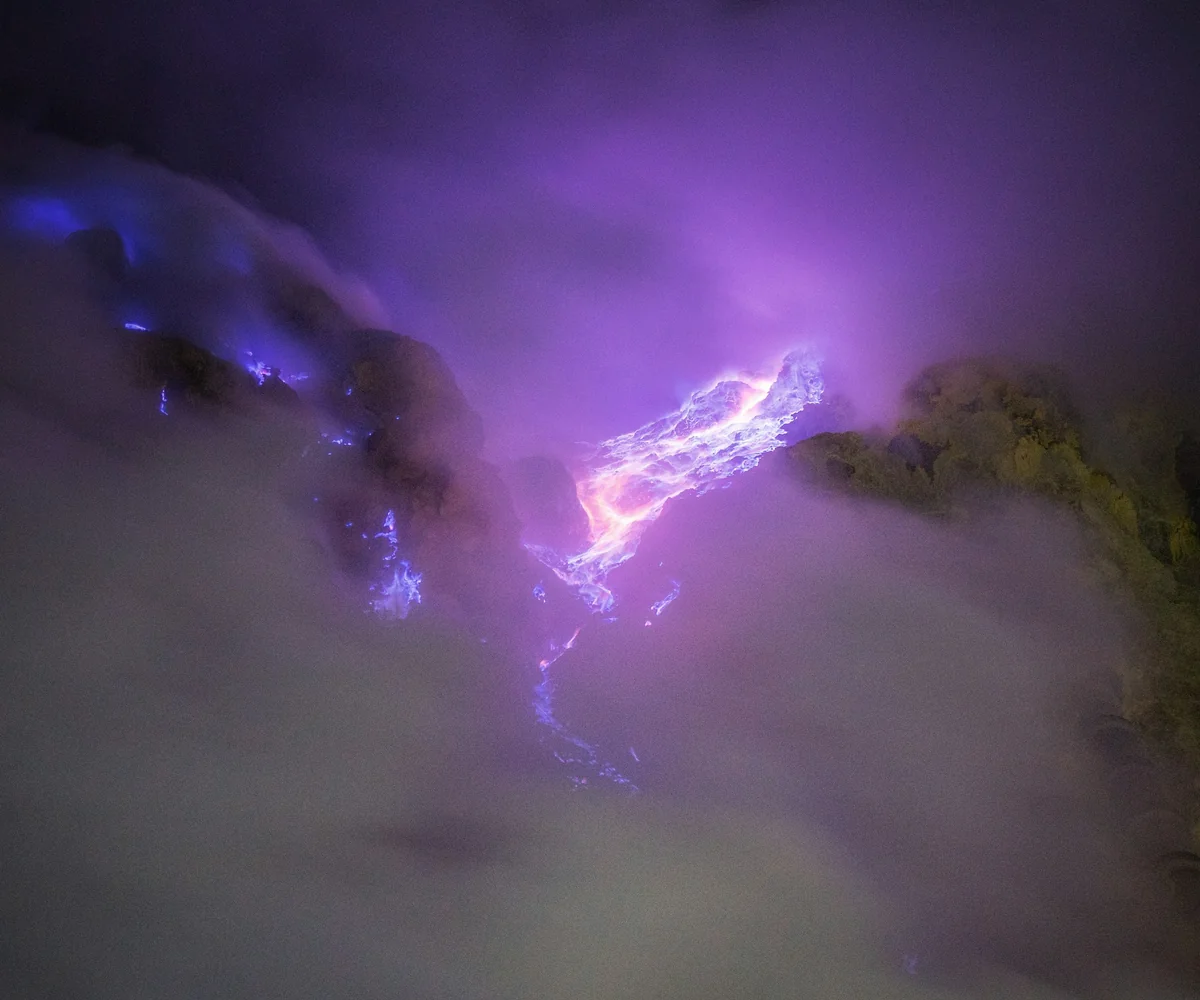
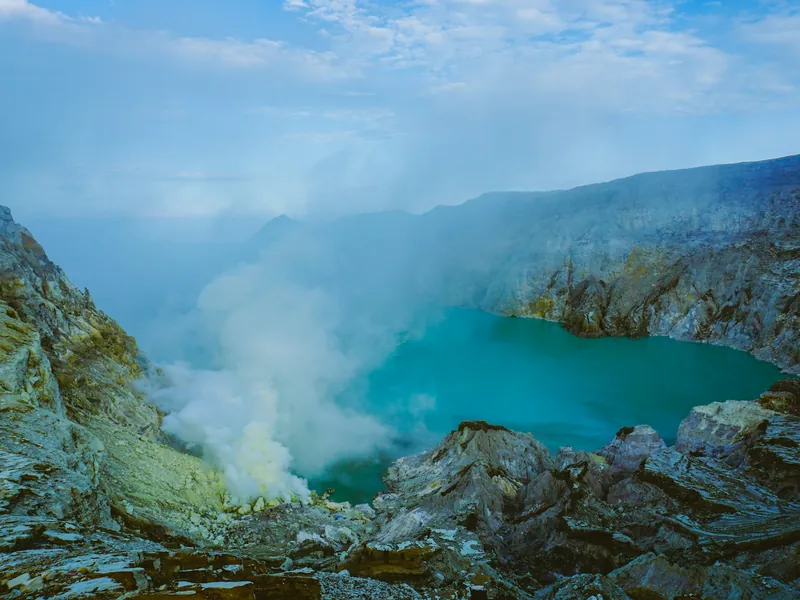
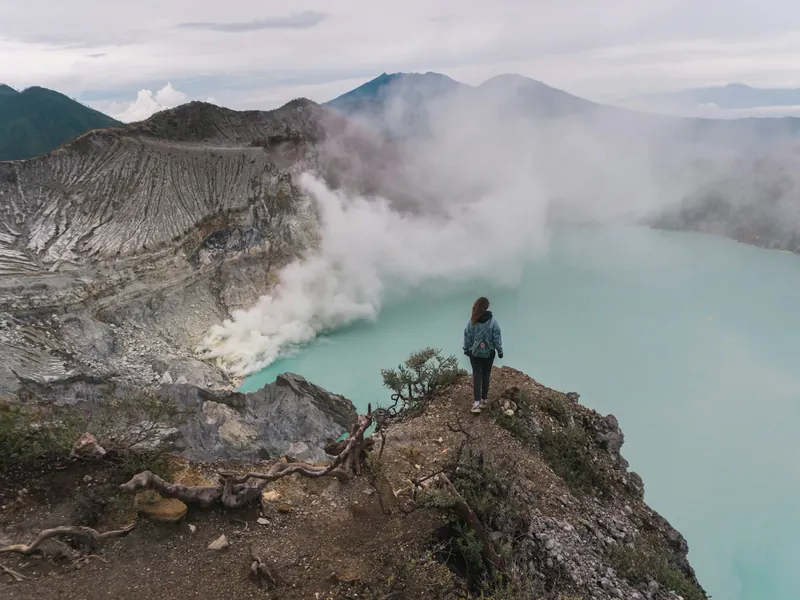
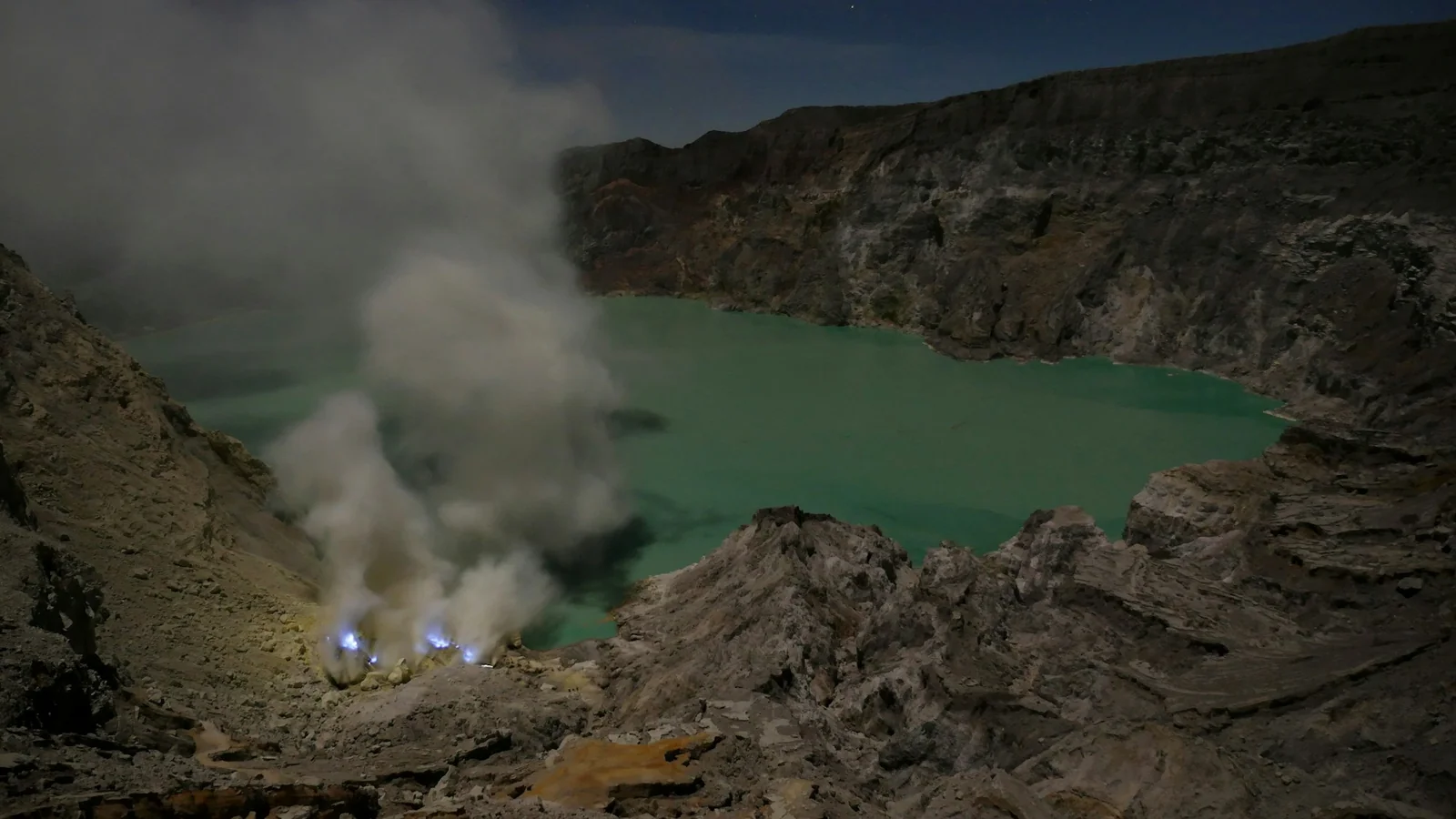
Kawah Ijen is an active volcano in East Java with a 1 km‑wide turquoise acid lake and large sulfur vents. At night, escaping sulfur gas ignites as it meets oxygen and produces what visitors call the “electric blue flames”.
A kawah ijen blue fire night trek means:
- Starting the hike around midnight–1:00 a.m.
- Walking 3 km uphill from the trailhead to the crater rim.
- Descending a steep rocky path ~250–300 vertical meters into the crater in a gas mask.
- Getting close enough to see the blue flames if conditions allow.
- Hiking back up to the rim for sunrise over the crater lake.
The blue fire is real, but it is not a “guaranteed show”. It’s an ongoing natural combustion of sulfur gas. Some nights it’s bright and obvious. Other nights it’s faint, smoky, or partly hidden by cloud and wind.
—
Is This Trek For You? Fitness, Difficulty and Who Should Skip It
The short version
- Distance: ~3 km up + 3 km down on the main path, plus ~1 km total inside the crater.
- Elevation gain: ~500 m from the parking area (~1,850 m) to the rim (~2,350 m).
- Time on feet: 4–6 hours of walking and scrambling.
- Feel: Like a long, steady stair-climb at altitude in the dark, with a rough final section.
If you can walk uphill continuously for 1.5–2 hours at a slow but steady pace, and you’re comfortable on uneven ground, you can usually complete the ijen night hike with gas mask support from a licensed guide.
Who this trek suits
- Regular walkers or trekkers who can manage 8–10 km walks on hills.
- Active travelers used to early starts and some sleep disruption.
- Teenagers with good fitness and patience (we usually suggest 12+).
Typical pace to the rim is 1.5–2 hours with breaks. From there, the descent into the crater and back can take another 1.5–2 hours, depending on your comfort with loose rock.
Who should strongly reconsider or take a rim-only option
Because of altitude, sulfur gas, and the steep descent, we do not recommend going down into the crater if you:
- Have asthma, chronic bronchitis, or other serious respiratory conditions.
- Have heart disease, uncontrolled high blood pressure, or recent major surgery.
- Are in late pregnancy.
- Are very sensitive to strong smells or enclosed, smoky spaces.
- Have serious knee, ankle, or balance problems on steep uneven ground.
You can still hike to the rim, stay above the crater, and watch the glow from a distance before sunrise. That’s a far safer option for many travelers and still powerful.
If we see you struggling badly on the first uphill section, we and your licensed local guide may recommend stopping at the rim only. That’s not us being strict or dramatic — it’s simply the safest choice some nights.
—
Typical Night Schedule: From Hotel Pick-Up to Sunrise
The exact timings change based on where you start (Bali, Banyuwangi, or Bondowoso), park regulations, and season. This is the most common ijen blue fire early morning hike schedule we plan for guests staying near Banyuwangi on the Java side.
23:00–00:00 – Hotel pick-up and drive to the trailhead
- Our driver and local guide meet you at your accommodation.
- Drive time to Paltuding (the Ijen parking and ticket gate) is usually 1–1.5 hours from Banyuwangi.
- You receive a briefing on the road: route, gas mask usage, what to do if the wind changes.
00:30–01:00 – Arrive at Paltuding and prepare
- Simple toilets and warungs (stalls) for hot tea/coffee and instant noodles.
- Park tickets and required permits handled by our team/guide.
- Final gear check: headlamp, warm layers, gloves, gas mask, water.
01:00–02:30 – Hike from Paltuding to the crater rim
- Distance: ~3 km.
- Elevation gain: ~500 m.
- Trail: Wide dirt-and-gravel path, then a bit steeper and rockier near the top.
- Uphill gradient: The middle part is the toughest — think a long staircase more than a gentle walk.
Most first-timers take 1.5–2 hours to reach the rim with quick snack and water stops. Miners sometimes pass you with sulfur loads; step aside when they do and let them move freely.
02:30–03:30 – Descent into the crater for the blue fire
If conditions allow and the park rangers open access, your guide will lead you down.
- Drop: ~250–300 vertical meters.
- Surface: Loose rock, dusty soil, some larger boulders.
- Exposure: Narrow sections where you need to focus and use both hands.
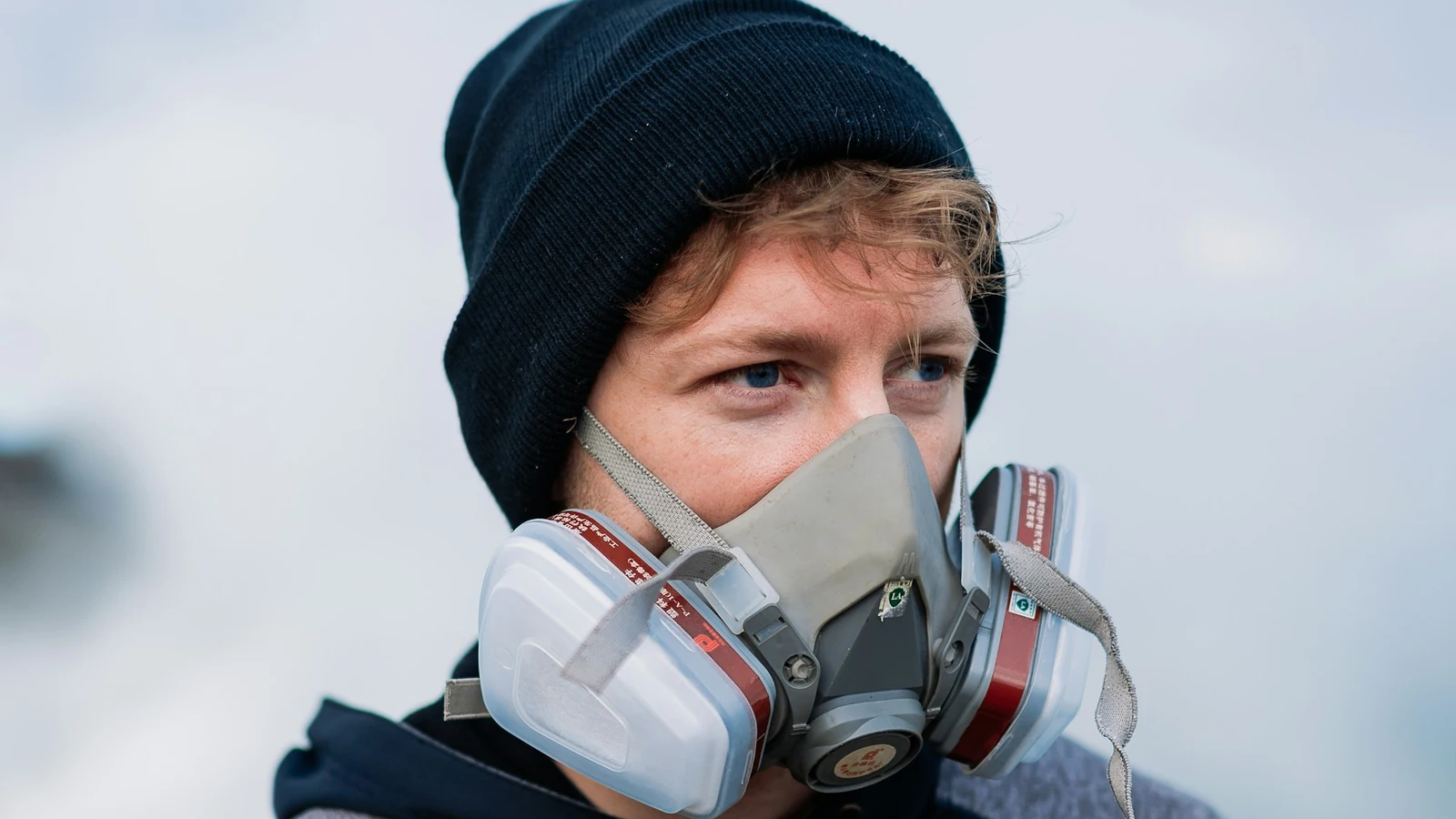
You put on your gas mask before descending. The smell of sulfur is strong. Some people tear up or cough a little at first; that usually eases as you adjust the mask and move to better airflow.
At the blue fire sulfur vents, you’ll feel heat from the burning gas, see miners working near the pipes, and hear the constant hissing and rumbling. It’s intense. We keep the group moving, no lingering in thick fumes.
03:30–04:30 – Climb back to the rim
The climb back up can feel harder than you expect. You’re already tired, it’s steep, and fine dust can make footing slippery.
- Time: 40–60 minutes at a measured pace.
- Goal: Reach the rim well before the sky starts to lighten.
If you choose not to go into the crater, you’ll stay with a guide on the rim, walk to a good viewing point, and rest. You’ll still see movement and glow from below.
04:30–06:00 – Sunrise over the crater lake
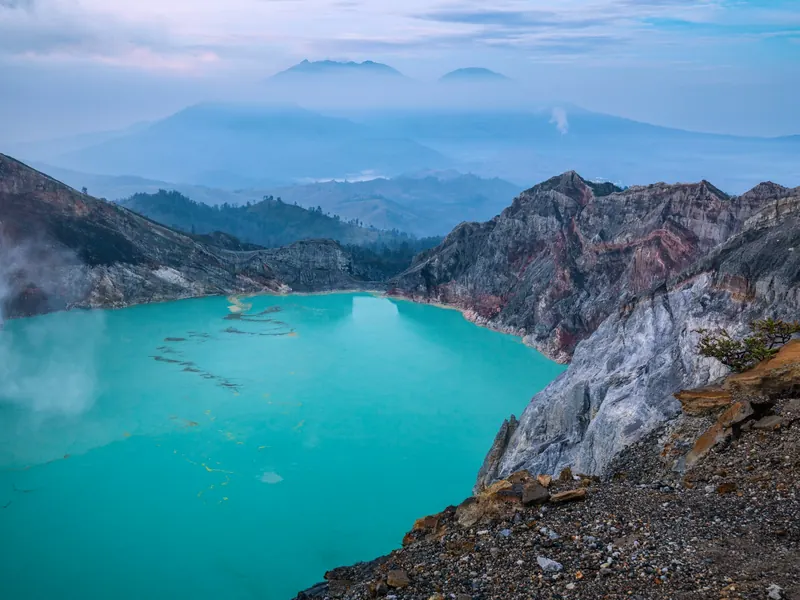
As the light comes, you finally see what you’ve been smelling and hearing: the entire crater basin, the milky turquoise acid lake, and the surrounding volcanic ridges.
Most groups:
- Sip hot drinks from local sellers.
- Walk along part of the rim for different angles.
- Take photos as the light changes quickly between 05:00 and 05:45.
On cloudy or rainy nights, sunrise can be muted or hidden. Sometimes the lake emerges in short windows between cloud layers. We cannot promise clear views, only that we put you in the right place at the right time.
06:00–07:30 – Descent to Paltuding
The walk down is much easier physically but can be hard on knees.
- Time: ~1–1.5 hours back to the parking area.
- Views: Coffee plantations, forest slopes, and a sense of where you walked in the dark.
At Paltuding, you can use toilets, grab a hot drink, and rest your legs.
07:30–09:00+ – Return to hotel / ferry / onward transfer
From here, your plan could be:
- Back to your Banyuwangi hotel for breakfast and sleep.
- Straight to Ketapang ferry terminal for return to Bali.
- Overland drive to Bondowoso or Bromo (on custom trips).
We design timing around your onward route. Our Bali Premium Trip reservations team will coordinate this with you in advance — message us on WhatsApp (+62 811 2859 0000) or plan your trip by email.
—
From Bali to Ijen Blue Fire: Route and Timing
Many visitors search for “ijen blue fire from bali” because they sleep in Bali and do Ijen as an overnight side-trip. That is possible, but longer and more tiring than starting from Java.
Option 1 – Bali–Ijen–Bali turn-around (very long, not for everyone)
Common flow:
- Afternoon/evening: Drive from South Bali or Ubud to Gilimanuk ferry port (3.5–5 hours depending on traffic).
- Late evening: Cross by ferry to Ketapang, East Java (~60–90 minutes including waiting).
- Night: Drive to Paltuding trailhead (~1.5–2 hours).
- 01:00–07:30: Ijen midnight blue fire trek.
- Morning: Return by car to Ketapang and ferry back to Bali.
- Afternoon: Drive back to your Bali hotel.
Door-to-door, this can mean 18–22 hours on the move. You will be very tired. We design this only for fit travelers with limited time who understand the trade-offs clearly.
Indicative total Bali–Ijen–Bali blue fire tour package cost with private transfers, ferry, guide, gas mask, and permits usually lands around US$160–260 per person (last verified June 2026) based on 2–4 travelers and standard private car, not luxury-level hotels.
Option 2 – Overnight in Banyuwangi (most comfortable)
This is our preferred plan for most guests:
- Day 1: Morning/afternoon transfer from Bali to Banyuwangi (drive + ferry). Check into hotel or guesthouse, early dinner, sleep.
- Night 1–2: Ijen blue fire night trek, then back to hotel for late breakfast and rest.
- Day 2: Cross back to Bali, or continue on to another Java destination.
This gives your body more margin for disrupted sleep and any weather delays. Package costs including 1–2 hotel nights, transfers, and guided trek typically range from US$190–320 per person (last verified June 2026) for a custom private ijen blue fire crater lake package, depending on group size and accommodation category.
—
What You Actually See: Blue Flames and Crater Lake, Without Hype
The blue fire itself
- Color: Deep electric blue at the base, fading to lighter blue and violet as flames thin out.
- Height: Some flares reach several meters high around the sulfur pipes.
- Movement: Flickering and flowing like liquid fire as gas flows and catches.
On strong nights you’ll notice:
- Clear flames licking around yellow sulfur deposits.
- Gas jets shifting as wind pushes smoke sideways.
- Reflections of the blue glow on nearby rocks.
On weaker or very windy nights:
- Flames can appear smaller, patchy, or lost behind thick white smoke.
- You may mostly see a diffuse blue glow and less sharp flame.
Your eyes adjust to the dark; brightness also depends on how many other headlamps are around. Our guides will help you position yourself and manage lights to see the flames better.
The crater lake at daybreak
Kawah Ijen’s lake is one of the largest highly acidic crater lakes in the world.
- Altitude: ~2,148 m.
- pH: Can be below 1 (highly acidic).
- Color: Milky turquoise to neon blue-green under early sun, changing with angle and cloud.
You do not swim in this lake. Even touching the water is unsafe.
From the rim, you see:
- Steam plumes rising from vents at the lake edge.
- Sheer rock walls around most of the basin.
- Sulfur deposits and scars from past eruptions.
On a clear morning, surrounding volcanoes and ridges appear beyond the crater. On some wet-season days you’ll watch clouds race through the bowl, revealing and hiding the lake in alternating minutes.
—
Safety: Sulfur Gas, Night Hiking, and Licensed Local Guides
Blue fire ijen night treks happen in an active volcanic environment. It is not an amusement park queue. There is real risk, and respecting that risk is what keeps you safe.
Main risks to understand
- Sulfur gas – In high concentrations or with the wrong wind, gas can burn eyes and throat, cause coughing, and in extreme cases lead to breathing difficulty.
- Loose, steep terrain – The path inside the crater has sharp rocks, dust, and narrow sections. Slips can cause moderate to serious injury.
- Crowds at night – In high season, many trekkers try to go down at similar times. This can create bottlenecks and stress if conditions change.
- Altitude and cold – Around 2,300 m is not extreme elevation, but combined with lack of sleep and cold, it can expose any underlying issues.
Why a licensed, vetted guide matters
Our blue fire ijen night trek is always led by an officially registered local guide who:
- Knows the quickest exit routes in the crater if wind shifts.
- Reads gas movement and decides if/when it’s safe to descend.
- Coordinates with park rangers and miners on the ground.
- Sets a pace that matches your group, not random faster hikers.
We at Bali Premium Trip arrange your guide, permits, and transfers, but we do not own the national park. That’s deliberate. It lets us select and keep working only with guides and drivers we trust after repeated trips, and change quickly if someone’s standards drop.
Practical safety rules we follow
- Gas masks are mandatory for any descent into the crater.
- If rangers close crater access, we do not argue; we switch to rim-only trekking.
- Children only go into the crater at the guide’s discretion, and we often recommend rim-only for families.
- We carry basic first-aid and always designate clear regroup points.
- If you feel unwell, you tell your guide immediately — not “later”.
Sulfur gas and night hiking do carry real risk. Follow your licensed guide’s instructions, even if that means giving up on the blue fire that night. You can always come back; your lungs do not reset as easily.
—
What We Provide vs What You Bring
What’s usually included in our Ijen blue fire tour package
Exact inclusions depend on your custom plan, but for a typical private blue fire night trek you can expect:
- Private car transfers on Java (and Bali if you start there).
- Ferry tickets between Bali and Java if needed.
- Park entrance fees and required permits for Ijen.
- Licensed local guide for the ijen night hike with gas mask guidance.
- Gas masks for crater descent (quality industrial-style, not cloth).
- Headlamps if you don’t bring your own.
- Bottled water during the hike (we still encourage you to carry your own reusable bottle).
- Coordination and 24/7 contact with our Bali Premium Trip office.
What you must bring yourself
- Footwear – Closed shoes with good grip: trail runners or hiking shoes. No open sandals inside the crater.
- Warm layers – Nights can dip to 5–10°C at the rim. Pack:
- Base layer or T-shirt,
- Fleece or light down jacket,
- Windproof shell if you have one.
- Gloves and beanie – Especially July–September.
- Small backpack – To carry water, snacks, camera, layers.
- Personal medication – Asthma inhaler, antihistamines, etc., plus any prescription meds you rely on.
- Snacks – Nuts, energy bars, something you know your stomach accepts at 3 a.m.
Optional but useful:
- Neck buff or scarf (extra help with dust).
- Camera with extra battery (cold drains power faster).
- Lightweight trekking pole (helpful on descent for knees).
What not to bring
- Drones without a permit – Park rules and local regulations apply; we do not encourage illegal drone use.
- Strong perfume or sprays – They mix badly with sulfur smells.
- Loose, dangling items – They can catch on rock or disturb other trekkers.
—
Sample Comparison: Bali Turn-Around vs Overnight in Banyuwangi
- Travel time total
- Bali same-day return: ~18–22 hours door-to-door. Banyuwangi overnight: ~8–12 hours spread across 2 days.
- Sleep quality
- Same-day: Short naps in car/ferry, no proper night sleep. Overnight: Real bed + 4–6 hours sleep before the hike.
- Difficulty perception
- Same-day: Trek feels harder due to exhaustion. Overnight: Trek still tough but more manageable.
- Typical indicative cost (per person, 2–4 pax)
- Same-day Bali–Ijen–Bali: ~US$160–260. Overnight with hotel: ~US$190–320. (Ranges last verified June 2026; vary by season and room choice.)
- Best for
- Same-day: Very time-poor, fit travelers who accept a rough schedule. Overnight: Most visitors who want safety margin and less stress.
If you’re unsure which style suits your group, message our team with your dates and fitness level and we’ll outline honest pros and cons. You can WhatsApp us on +62 811 2859 0000 or plan your trip via our contact page.
—
How Booking with Bali Premium Trip Works
Ijen Tour Package is the dedicated Ijen service of Bali Premium Trip, a Kuta-based operator founded in 2015. We’re a Bali team that has run Java volcano trips for years, with Ijen as a core focus.
What we do directly
- Answer your questions honestly before you book.
- Design a custom ijen blue fire tour package that matches:
- Your starting point (Bali or Java),
- Your fitness and medical constraints,
- Your wider itinerary (Bromo, Bali, or beyond).
- Coordinate:
- Private drivers and vehicles,
- Ferry schedules,
- Hotel bookings (if requested),
- Park tickets and permits,
- Licensed, vetted local guides.
You book directly with our own Bali Premium Trip reservations team at transparent, published rates. No third-party booking platforms or hidden mark-ups.
What we arrange via local partners
We do not own:
- The Ijen National Park concession.
- Ferries between Bali and Java.
- On-site ticket offices or food stalls.
Instead, we arrange these through licensed local partners in Banyuwangi and East Java. We keep working only with operators who show reliable safety standards and fair treatment of staff.
—
Best Time for an Ijen Night Trek and Blue Fire
Blue fire can be visible year-round, but your overall experience changes by season.
Dry season (roughly May–October)
- Pros:
- Usually clearer nights and better chance of seeing stars and sunrise.
- Trails are drier and less slippery.
- Blue fire often appears sharper to the eye.
- Cons:
- More visitors on popular dates.
- Nights can be colder on the rim (down near 5°C at times).
Wet season (roughly November–April)
- Pros:
- Fewer people on midweek nights.
- Cooler daytime temperatures in the lowlands.
- Cons:
- Clouds and rain can reduce visibility or block sunrise.
- Trails become muddy and more tiring.
- Occasionally, high winds or heavy rain can cause temporary access restrictions.
The ijen night trek best time blue fire question has no perfect answer. If seeing the flames clearly is your absolute priority, a dry-season window with some date flexibility is best. But we’ve had great blue fire nights in January and foggy non-event nights in August. Nature is not a timetable.
—
Realistic Expectations: Comfort, Crowds and Mining
To keep this honest, here’s what this trip is not:
- It’s not a comfy walk with handrails. Inside the crater especially, you will use your hands, bend your knees, and at times move in single-file.
- It’s not silent. You’ll hear other groups, miners’ calls, and the hiss of gas. High season weekends can feel busy at popular times.
- It’s not a staged show. The blue flames and miners are part of ongoing real work and volcanic activity.
You will likely see sulfur miners carrying heavy loads on bamboo yokes. Many visitors are moved by this. If you photograph them, ask politely where possible and respect a “no”. Buying small sulfur carvings is one way some travelers choose to contribute directly, but you are not obliged.
We work only with guides who treat miners with respect and do not push guests into uncomfortable or exploitative behavior for photos.
—
Ready to Plan Your Kawah Ijen Blue Fire Tour?
If you’ve read this far and still feel drawn to that 2 a.m. climb and the strange blue glow below your feet, you’re probably the right kind of person for Ijen.
Tell us:
- Your planned travel dates.
- Where you’ll be the day before (Bali area or Java).
- Number of people and rough fitness level.
- Any medical considerations you want us to know.
Our reservations team will outline one or two clear options with indicative pricing and what each involves in plain language. Message us on WhatsApp at +62 811 2859 0000 or plan your trip via our contact page.
—
FAQs
Is the Kawah Ijen blue fire safe to see?
Seeing the blue fire itself is generally safe if you use a proper gas mask, follow a licensed guide, and leave the crater quickly if gas thickens or wind changes. The main risks come from sulfur fumes and steep, loose terrain, so this is not a casual walk; you must be willing to follow instructions and turn back if conditions are poor.
Can I see the blue fire without going into the crater?
You may see a faint blue glow from the rim on very clear nights, but to see the flames up close most people need to descend at least partway into the crater. That said, if you have breathing or heart issues, a rim-only hike is usually the wiser choice, and the sunrise over the lake is still impressive in its own right.
Do I need to be very fit for the Ijen midnight blue fire trek?
You don’t need to be an elite athlete, but you should be able to walk uphill steadily for 1.5–2 hours and feel comfortable on uneven ground. If short flights of stairs leave you totally breathless, the combination of altitude, lack of sleep, and steep sections will feel very hard; sharing this honestly with us before booking lets us adapt the plan.
What should I wear for the Ijen night hike with gas mask guide?
Wear closed shoes with good grip, long pants, a moisture-wicking top, and warm layers like a fleece and light jacket. Bring a beanie, gloves in the cooler months, and a small backpack for water, snacks, and your camera; we provide gas masks and usually headlamps, but you’re welcome to bring your own light too.
Can children join the Kawah Ijen blue fire night trek?
Older children and teenagers with good fitness can usually hike to the rim, but the crater descent is more serious. We often recommend rim-only for families, with any decision to go lower made on the spot by the guide after assessing the child’s comfort, trail conditions, and gas levels.