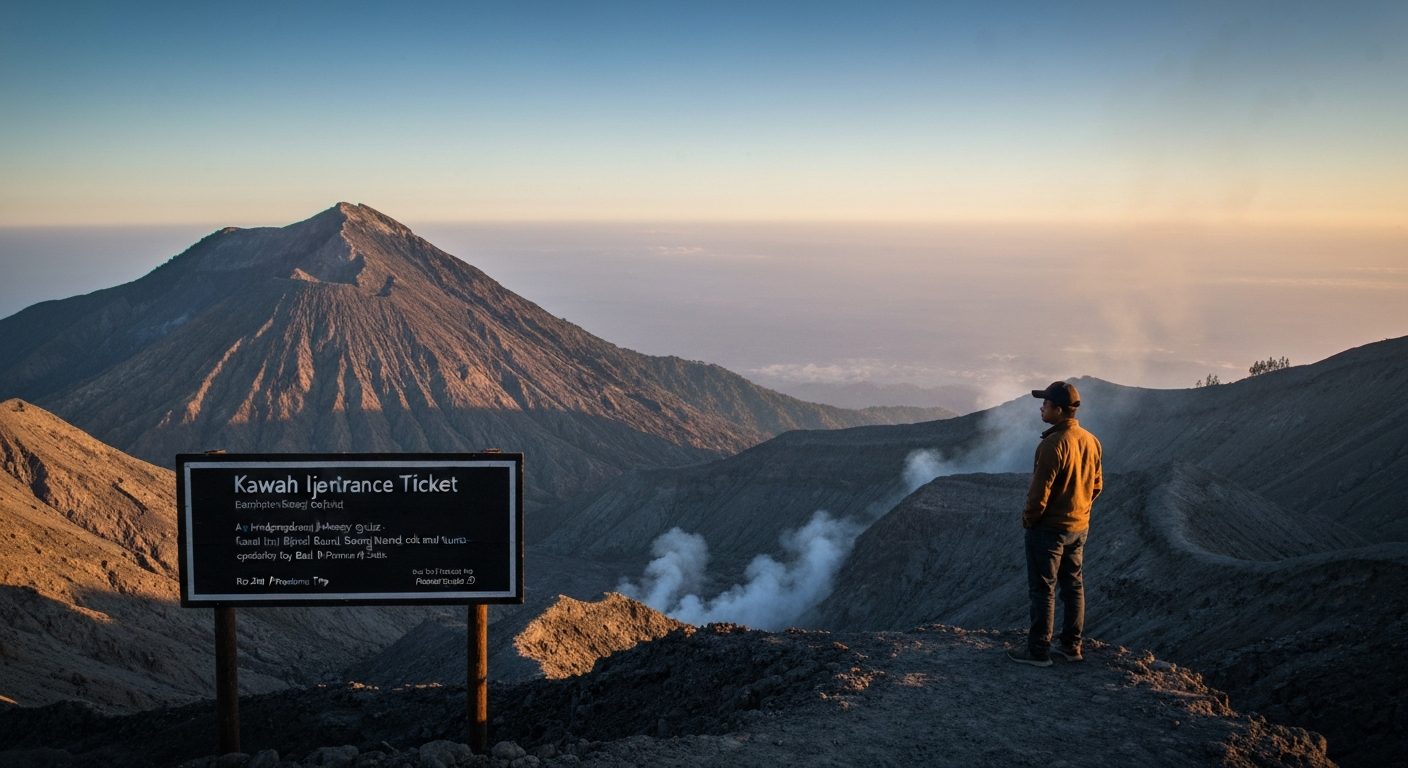
Planning your journey to witness Kawah Ijen’s blue fire and the majestic crater lake requires understanding the exact Kawah Ijen entrance fee ticket structure and how to legally secure your access. This guide, current for 2026, details every cost and step involved in obtaining your mandatory permit.
As Galih Pratomo, East Java Logistics & Routes Researcher for Ijen Tour Package, I spend my days mapping every route, pressure-testing schedules, and ensuring travelers arrive at Paltuding rested and on time. My goal is to cut through the confusion surrounding park entry, equipping you with honest, direct information so your Ijen adventure starts smoothly. Getting your Kawah Ijen permit isn’t just a formality; it’s a crucial part of responsible tourism that protects this unique natural wonder and supports local communities.
Why Does Kawah Ijen Have an Entrance Fee and Permit System?
Kawah Ijen is not just a popular tourist destination; it’s a protected natural reserve within the Ijen Geopark, managed by the Agency for Conservation of Natural Resources (BKSDA) of East Java. The entrance fees and permit system serve several vital purposes.
Conservation and Maintenance
The funds collected directly contribute to the conservation efforts of the Ijen crater area. This includes maintaining trails, managing waste, monitoring the fragile ecosystem, and mitigating the environmental impact of visitor traffic. The Ijen landscape, with its highly acidic lake and active fumaroles, requires constant attention to remain safe and accessible.
Supporting Local Communities
A significant portion of the fees helps support the local communities surrounding the park, including the sulfur miners and residents who depend on tourism. These funds can go towards infrastructure development, educational programs, and other initiatives that benefit the people living closest to the crater.
Visitor Management and Safety
The permit system, especially the online booking requirement and daily visitor cap, is primarily a safety and management tool. It allows park authorities to control the number of people on the trails at any given time, reducing congestion, minimizing risks, and ensuring a more enjoyable experience for everyone. This is particularly critical during peak hours when visitors descend into the crater for the blue fire phenomenon.
Kawah Ijen Entrance Fee Permit 2026 Cost: A Clear Breakdown
The cost to enter Kawah Ijen varies based on your nationality and the day of your visit. It’s important to differentiate between domestic (Indonesian citizens/KITAS holders) and foreign visitors, as well as weekdays versus weekends/national holidays. All prices are set by the BKSDA Jatim and are subject to change. The following figures were last verified in June 2026 and are indicative. Always confirm the latest rates on the official BKSDA Jatim portal before your trip.
- Kawah Ijen Crater Entrance Fee Permit Tiers (Indicative, June 2026)
-
- Foreign Visitor, Weekday: IDR 100,000 per person (~US$6-7)
- Foreign Visitor, Weekend/National Holiday: IDR 150,000 per person (~US$9-10)
- Domestic Visitor, Weekday: IDR 5,000 per person (~US$0.30-0.40)
- Domestic Visitor, Weekend/National Holiday: IDR 7,500 per person (~US$0.50-0.60)
These fees grant you entry to the Kawah Ijen area and are separate from any tour packages, guide fees, or additional services you might opt for. The payment typically includes basic personal accident insurance, though coverage limits are generally low. We always recommend travelers secure their own comprehensive travel insurance.
Mandatory Kawah Ijen Online Ticket Booking: Tiket.BBKSDAJatim.org
Since the reopening of Kawah Ijen to tourism, physical ticket purchases at the Paltuding entrance gate are no longer permitted. All visitors, without exception, must secure their Ijen Crater permit online booking in advance through the official BKSDA Jatim portal: tiket.bbksdajatim.org. This system is crucial for managing the Kawah Ijen daily visitor limit of 2,000 people and ensuring compliance with safety protocols.
Failure to book your permit online beforehand will result in denied entry. There are no exceptions to this rule. Do not travel to Paltuding without a confirmed booking.
Why Advance Booking Matters: The 2,000-Person Daily Cap
The 2,000-person daily visitor limit for Kawah Ijen is a strict regulation designed to protect the environment and ensure visitor safety. During peak seasons, holidays, and weekends, this limit can be reached quickly. If you plan to visit during these popular times, booking your Ijen permit requirements entrance fee well in advance is not just recommended, it’s essential. For popular blue fire viewing slots, tickets can sell out days, even weeks, ahead.
The booking window typically opens a few weeks to a month in advance. Keep an eye on the official portal for specific dates. Last-minute bookings are risky and often lead to disappointment.
Step-by-Step Walkthrough: Kawah Ijen Online Ticket Booking via BKSDA Portal
Navigating an unfamiliar online booking system can be daunting, especially when it’s in a foreign language. Here’s a detailed, step-by-step guide to help you secure your kawah ijen online ticket booking tiket.bbksdajatim through the official BKSDA Jatim portal. This process is for individual bookings. If you’re traveling with Bali Premium Trip, we handle this for you.
1. Access the Official Portal
Go to tiket.bbksdajatim.org. Ensure you are on the correct, official site to avoid scams.
2. Select Your Visit Date and Time
- On the homepage, you’ll see a calendar. Choose your desired visit date.
- After selecting the date, available time slots for entry will appear. Kawah Ijen typically opens for sunrise/blue fire treks around 2:00 AM. Select the slot that aligns with your planned arrival at Paltuding. Be precise.
- Note: The blue fire phenomenon is best viewed between 2:00 AM and 4:00 AM, before sunrise.
3. Choose Your Ticket Type and Quantity
- The system will prompt you to select your ticket type: “Wisatawan Mancanegara” (Foreign Tourist) or “Wisatawan Nusantara” (Domestic Tourist).
- Specify the number of tickets you need. Each traveler requires their own individual permit.
4. Input Personal Data
You will need to provide personal details for each ticket holder. This typically includes:
- Full Name (as per passport)
- Nationality
- Passport Number (for foreign visitors) / ID Card Number (KTP/KITAS for domestic visitors)
- Date of Birth
- Email Address
- Phone Number
Double-check all information for accuracy. Errors can lead to issues at the entrance.
5. Review and Confirm Your Booking
Before proceeding to payment, review all the details of your booking: date, time, number of tickets, and personal information. Make sure everything is correct. The system will display the total ijen crater entrance fee permit 2026 cost.
6. Make Payment
The portal typically offers various payment methods, which may include bank transfers (often via virtual account), credit/debit cards, or e-wallets. Follow the instructions carefully to complete the transaction. Keep a record of your payment confirmation.
7. Receive Your E-Ticket/QR Code
Once payment is successful, you will receive an e-ticket or QR code via email. This is your official permit. Print it out or save it on your phone for presentation at the Paltuding entrance checkpoint. Connectivity can be unreliable at the base, so a physical printout is always a good backup.
Remember that the permit is non-transferable and non-refundable. Plan your visit carefully.
Other Essential Costs Beyond the Kawah Ijen Entrance Fee
While the entrance permit is the primary cost, several other expenses contribute to the overall price of an Ijen trek. Being aware of these helps in budgeting and avoiding surprises.
1. Parking Fee at Paltuding
If you arrive by private vehicle (car or motorbike), there’s a small parking fee at Paltuding. This is typically around IDR 5,000-10,000 (~US$0.30-0.70) per vehicle. This fee is paid directly at the parking area.
2. Local Mountain Guide
Hiring a licensed local guide is highly recommended, especially if you plan to descend into the crater for the blue fire. Guides provide essential safety briefings, navigate the challenging terrain in the dark, and offer valuable insights into the geology and culture of Ijen. While not strictly mandatory for staying on the main rim trail, venturing into the crater without one is unsafe and often discouraged by park rangers.
The cost for a guide typically ranges from IDR 100,000-300,000 (~US$6-20) per group, depending on group size and negotiation. Many tour packages, including those from Bali Premium Trip, already include a vetted, licensed guide.
3. Gas Mask Rental
Sulfur gas concentrations, particularly near the blue fire area and inside the crater, can be high and dangerous. A proper gas mask (not just a dust mask) is absolutely essential for your safety. You can rent these at Paltuding from local vendors, usually for IDR 25,000-50,000 (~US$1.50-3.50). Ensure the mask is in good condition and fits properly. Our tours always provide high-quality, pre-checked gas masks.
4. Ojek / Wheelbarrow Service
The trek from Paltuding to the crater rim is about 3 km (1.8 miles) and involves a significant uphill climb. For those who find the ascent too challenging, local porters offer a “Kawah Ijen Taxi” or “Ojek” service using modified wheelbarrows. They will push you up to the rim and, if desired, back down. This service is operated by the local sulfur miners and is a direct way to support them.
The cost for the ojek service is substantial, typically ranging from IDR 600,000-1,000,000 (~US$40-70) for a round trip up to the rim and back. This is a negotiated price directly