Uncategorized
Ijen Blue Fire & Crater Photography Tips — Camera Settings & Best Spots
Field-tested Ijen crater photography tour guide: settings, tripods, blue fire angles, new-moon timing and real trek advice from nightly Ijen hikers.
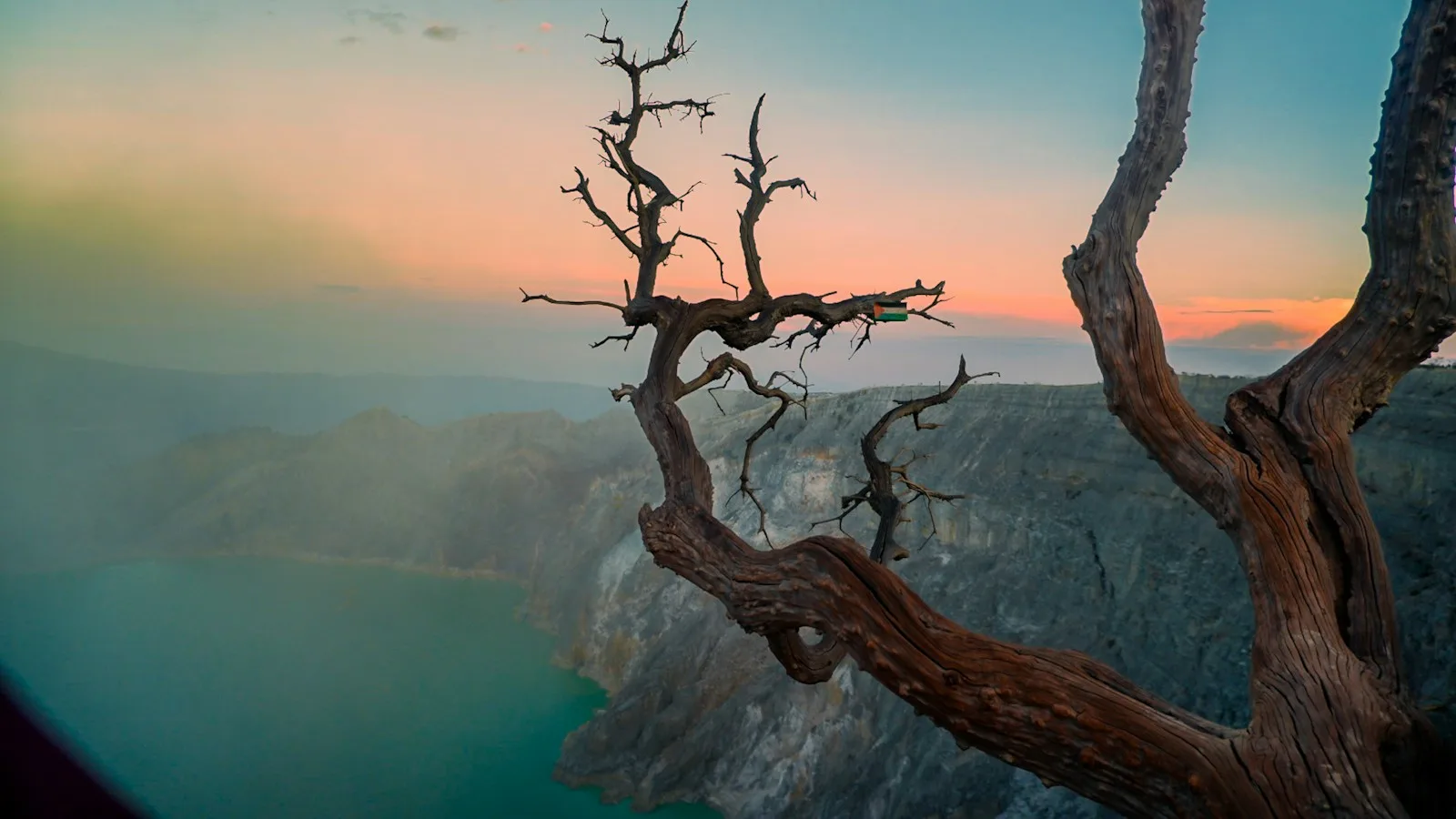
An ijen crater photography tour is a night trek to Kawah Ijen focused on shooting the blue sulfur flames, miners and sunrise crater views rather than just “seeing the sights.” On this page I’ll walk you through exactly how to plan, shoot and survive that dark, sulfur-filled night with your camera still working — and you still enjoying it.
I’m Anindya, Ijen Trek & Mountain Editor at Ijen Tour Package (operated by Bali Premium Trip, founded 2015 in Kuta, Bali). I’ve climbed to the Ijen rim more than a hundred times in every season, usually with at least one photographer on the rope. What follows is the guide I wish they all had before landing in the parking area at midnight.
—
What an Ijen crater photography tour really involves
Before we talk ISO and shutter speeds, you need a clear picture of the conditions you’ll shoot in.
Kawah Ijen is not a controlled photo studio. It’s an active sulfur mine on the edge of a 1‑kilometre‑wide crater, with:
- A 3 km hike up a steep, dusty access road (about 90–120 minutes for most visitors).
- Around 300–400 m of elevation gain from trailhead to rim.
- A further 30–45 minutes down a rocky path to the blue fire area on the crater floor.
- Temperatures that can feel close to 5–10°C near the rim before dawn, with wind chill.
- Periodic heavy sulfur gas that can sting eyes and choke lungs without a proper mask.
Photography comes on top of that hike, gas, darkness and time pressure. Your blue fire window is usually between about 01:30 and 04:30, depending on your start time and crowds. That’s not much.
Our role at Ijen Tour Package is to design the night around that reality. We arrange private, guided Ijen crater photography tours with our own Bali Premium Trip team plus licensed local guides, transport and permits — no middlemen, you book directly with our reservations staff at transparent, published price ranges.
—
Camera gear checklist for Ijen blue fire and crater photography
You do not need cinema-level gear. You do need equipment that can handle low light, some bumps, and sulfur.
Minimum viable setup
If you want usable images of the ijen crater blue sulfur flames photography area, this is the floor:
- Camera body
- A camera that lets you shoot in full Manual mode and change ISO, aperture and shutter independently.
- A modern mirrorless or DSLR with decent high-ISO performance helps. APS‑C and full-frame both work.
- Lens
- A wide or standard zoom in the 16–35 mm or 24–70 mm range (full-frame equivalent).
- Maximum aperture of f/2.8–f/4 is very helpful for blue fire.
- Prime lenses like 24 mm f/1.8 or 35 mm f/1.8 are great if you’re comfortable composing with your feet.
- Tripod
- Absolutely essential for blue fire and crater-lake long exposures.
- Go for something compact and sturdy. Lightweight carbon or decent aluminium, 1–1.5 kg is fine.
- Avoid tall, flimsy travel tripods that vibrate in the wind.
- Power & storage
- 2–3 fully charged batteries (cold and long exposures drain faster).
- 1–2 memory cards with plenty of space. It’s common to shoot 300–600 frames that night.
- Protection
- A simple rain cover or plastic bag and rubber band for sudden drizzle and sulfur dust.
- Microfiber cloth to wipe condensation and sulfur film from the lens.
Helpful extras
Not mandatory, but they make life easier:
- Headlamp with red mode – so you can see settings without blinding others or blowing your own night vision.
- Spare small flashlight – backup if the headlamp fails on the rim.
- Remote release / intervalometer – avoids camera shake on 10–30 second exposures.
- UV / clear protective filter – sacrificial glass for the front element near sulfur vents.
- Gaffer tape – to lock focus rings and prevent tripod legs from slipping on rock.
What doesn’t make sense to bring
- Heavy 70–200 mm telephoto unless you specifically want tight miner portraits. You’ll feel the weight on that last, steep kilometre.
- Drones. As of the last checks in June 2026, drone use is tightly restricted in many Indonesian protected areas and not appropriate around miners and gas vents.
- Large camera bag full of bodies and lenses. One body, one or two lenses is already plenty to manage while wearing a gas mask.
—
Safety basics for photographers on Ijen
This is a photography article, but you can’t separate the images from the environment you’re shooting in.
Sulfur gas and your lungs
Blue fire exists because of burning sulfur gases. Those same gases can:
- Burn eyes and throat.
- Trigger asthma.
- Disorient you if a dense cloud blows through.
On a guided tour, your local guide will carry or provide a proper gas mask (not just a thin paper mask). Wear it when told. If you’re composing a shot and the guide says: “Mask on, move now,” you stop shooting and follow.
Photography plans are always second to gas and safety decisions. This guide is general; the licensed guide leading your group has the final call on where you can stand and for how long.
Tripod discipline in the dark
Tripod legs plus narrow paths plus sleepy people is a bad mix. Be strict with yourself:
- Keep your tripod footprint compact on crowded trails.
- Never block the main walking line.
- On the crater floor, set up away from the main miner route and away from guide ropes.
A cracked ankle finds you a lot faster than a perfect long exposure.
—
Best time to photograph Ijen blue flames and crater
Two schedules matter: the time of night and the moon phase.
Night schedule: your practical timeline
Most tours from Bali or Banyuwangi aim to reach the rim around 01:30–03:00. The rough pattern:
- 23:00–01:00 – Drive to Paltuding trailhead.
- 00:00–02:00 – Hike 3 km to the rim (90 minutes is a common pace with short breaks).
- 01:30–03:30 – Descend into the crater and shoot blue fire.
- 04:00–05:30 – Climb back to the rim and set up for first light, miners, and crater lake.
- 05:30–07:00 – Sunrise and golden hour over the turquoise lake and sulfur mine.
- 07:00–08:00 – Hike back down to Paltuding.
Blue fire is visible all night in theory, but the best time to photograph Ijen blue flames in real terms is:
- After you reach the crater floor and your eyes adjust.
- Before the sky begins to brighten — usually up to about 04:00–04:30.
Earlier in the night, gases can be thicker. Later, the sky lightens, which reduces contrast and makes the flames less defined on camera.
Moon phase: planning around the new moon
For an ijen crater new moon phase photography planning schedule, think about your trade‑off:
- New moon or thin crescent
- Pros: Darker skies, stronger flame contrast, more dramatic blue fire shots.
- Cons: Harder to navigate and focus, foreground may be very dark without artificial light.
- Half to nearly full moon
- Pros: Beautiful soft light on crater walls and miners, easier to compose and move.
- Cons: Blue flames appear less intense on camera; highlights can blow out quickly.
If blue fire images are your top priority, we suggest planning as close as you can to new moon ±3 days. If you prefer a mix of blue fire plus landscape, a first quarter or last quarter moon gives you a nice balance.
We can help align your tour dates to the lunar calendar when you plan your trip with our reservations team via email or WhatsApp.
—
Core blue fire Ijen photography tips: camera settings
Let’s get to the part you probably came for: numbers.
Treat these as starting points. You’ll adjust based on your camera, lens, and how much the blue flames are dancing.
Basic starting settings for blue fire
On the crater floor, near the main vents:
- Mode: Manual (M)
- ISO: 3200–6400
- Aperture: f/1.8–f/2.8 if your lens allows; f/4 at most
- Shutter speed: 1–4 seconds
- White balance: Auto or around 4000–5000 K; you can fine-tune in RAW later.
- Image format: RAW (or RAW+JPEG if you want quick previews).
Table: Sample starting settings by lens speed
| Lens | ISO | Aperture | Shutter speed | Notes |
|---|---|---|---|---|
| 24 mm f/1.8 | 3200 | f/1.8 | 1–2 s | Good balance of sharpness and noise. |
| 24–70 mm f/2.8 | 3200–6400 | f/2.8 | 2–4 s | Watch for miner movement blur. |
| 18–55 mm f/3.5–5.6 kit | 6400 | f/3.5 | 3–6 s | More noise and motion blur; shoot several frames. |
Longer than about 4–6 seconds and individual flames start to smear into a softer blue glow. That can be beautiful, but it’s a different look from crisp tongues of fire.
Manual focus in the dark
Autofocus often fails near the vents. You must be comfortable with manual focus:
- Switch to Live View.
- Point at a bright contrast edge — a miner’s headlamp or a lit edge of rock.
- Use maximum screen magnification (often 8–10x).
- Slowly adjust the focus ring until the light is as small and sharp as possible.
- Tape the focus ring if it tends to slip.
Do not rely on the infinity mark on your lens; many lenses focus beyond infinity.
Re-check focus every 10–15 minutes. Temperature changes and accidental bumps can throw it off.
Managing noise and motion
You’ll see three types of blur/noise:
- High ISO noise – grain across the frame.
- Subject motion – miners moving, flames flickering.
- Camera shake – if you touch the camera during an exposure.
Strategies:
- Use your tripod properly: centre column down, legs fully locked, camera strap secured.
- Use a 2-second timer or remote release.
- Accept some motion blur on moving miners — it often adds mood.
- Shoot a short burst of similar frames (3–5) and keep the sharpest.
—
Composing blue fire, miners and the crater floor
The ijen best angle photo composition location is not one single spot. It’s a set of vantage points that change with gas, crowds and guide instructions.
On the crater floor: blue fire and miners
From the main viewing area near the vents:
- Use 24–35 mm for context shots showing:
- Bright blue flames in the lower third.
- Silhouetted miners in the midground.
- Crater walls framing the top.
- Use 35–70 mm for tighter frames of:
- A single miner backlit by blue flames.
- Hands and tools with small flame patches.
- Gas clouds swirling in front of the fire.
Blue fire itself is abstract. Your images become stronger when you anchor the flames with human or rock shapes.
Photographing sulfur miners respectfully
Ijen crater photography tips sulfur miners always start with this: these are people working a hard, dangerous job, not props.
Guidelines:
- Ask your guide how to greet miners and whether a particular worker is open to photos.
- If you want a close portrait, ask permission with words or gesture and pay a small tip if the miner agrees and pauses work.
- Avoid blocking their path, stairs or wheelbarrows for a composition.
- Never request that someone remove their mask for “a better face shot.”
Many miners appreciate respectful interest and a fair tip. Some are tired and want no camera in their face. Let your guide read the situation; follow their lead.
—
Sunrise and crater lake: settings and angles
Once you climb back to the rim, you shift from ultra-low light to fast-changing dawn and then bright volcanic daylight.
Typical settings for rim and lake
Starting points:
- Mode: Aperture Priority (A/Av) or Manual.
- Aperture: f/5.6–f/8 for landscapes.
- ISO: 100–400.
- Shutter speed: Usually 1/60–1/500 s, depending on light.
- White balance: Daylight or Auto.
Early blue hour (about 30–45 minutes before sunrise) is a sweet spot for balancing sky and crater illumination. You may need a tripod again for:
- 0.5–2 second exposures at ISO 200.
- f/5.6 for enough depth of field.
Best rim vantage points
Your guide will suggest exact stops depending on crowd and closures, but generally:
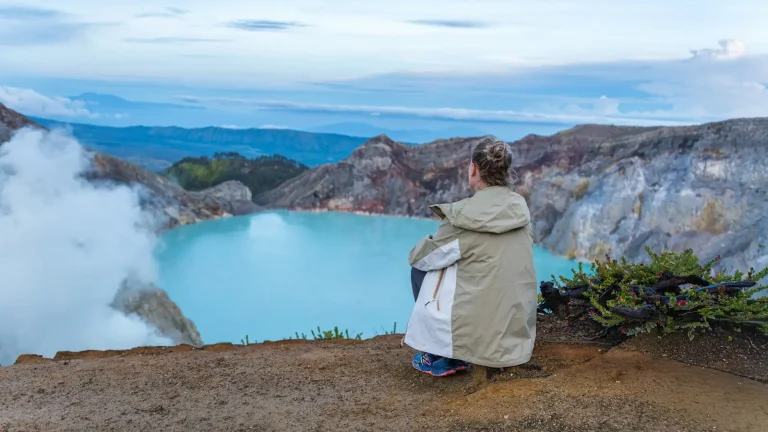
- Main rim viewpoint near the trail exit
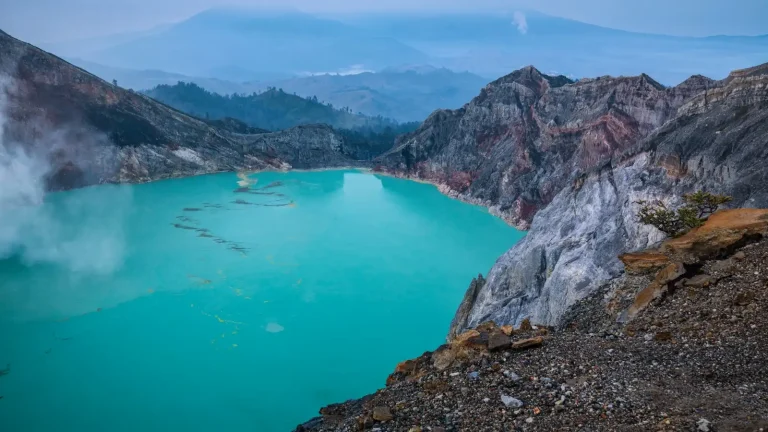
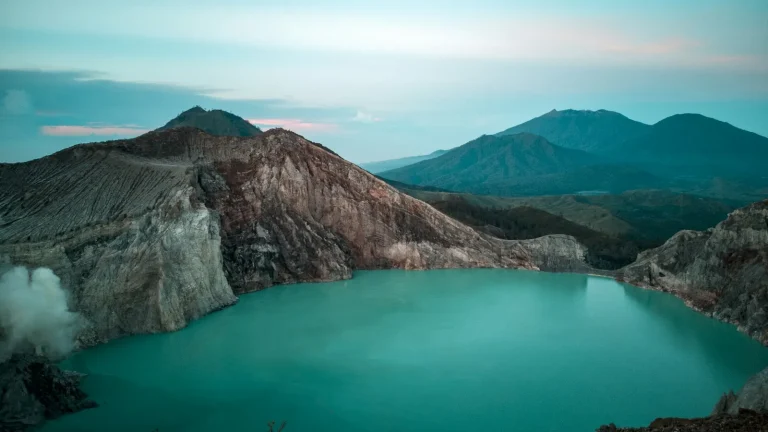
- Classic overlook of the turquoise acid lake with the sulfur mine to the right.
- Ideal for wide frames at 16–24 mm.
- Good place for group shots and layers of clouds rising from the crater.
- Short rim walk to the left (north)
- Fewer crowds once the big groups stop.
- Angles where you can place:
- Foreground rocks or plants.
- Midground crater lip.
- Background mountains (Raung, Merapi) under rising sun.
- Telephoto opportunities
- If you carried a 70–200 mm, now is the time to use it on:
- Miners as small figures against the vast crater.
- Details of yellow sulfur deposits contrasted with the blue-green lake.
Remember: Parts of the rim can be closed or limited for safety, especially after heavy rain or heightened activity. Guides always follow current park rules; your composition must adapt.
—
Balancing photography with the physical trek
Even experienced photographers sometimes forget: you’re hiking around 6 km in the dark with pack, water, and tripod, often on minimal sleep.
A few practical tips from watching hundreds of people do this:
- Pack light – Aim for a daypack of 5–7 kg including water, camera and extra layers.
- Footwear matters more than gear – Grippy hiking shoes or trainers with good tread help much more than a second lens.
- Layer your clothing – You’ll be sweating on the climb and chilled on the rim. A moisture-wicking base, light fleece, and windproof shell work well.
- Eat before the climb – A small meal or snack in the car, plus quick carbs (nuts, chocolate, dates) during breaks.
- Respect your limits – If you’re exhausted at the rim, it’s okay to skip the crater descent and focus on rim and sunrise shots. There is no “failure” in listening to your body.
Most of our Ijen crater photography tours are private or small groups, which makes it easier to adjust pacing for photo stops and your fitness. Typical door-to-door durations from Bali can be 18–24 hours round trip, including transfers and ferry, so plan recovery time after.
Indicative full‑trip prices from Bali for a privately guided Ijen night climb with transport, ferries, local guide, permits and gas masks usually fall around US$150–260 per person for 2–6 travellers (last verified June 2026; varies by group size, season and add‑ons). Contact us for current ranges; we don’t pad prices with third‑party markups.
—
Quick-reference checklist for the night
- Trail distance
- ~3 km one way to rim, plus 0.5–1 km down and back inside crater (conditions allowing).
- Elevation gain
- Roughly 300–400 m from trailhead to rim.
- Hiking time
- 90–120 minutes up, 40–60 minutes down, similar back out.
- Blue fire window
- Approx. 01:30–04:30 before sky brightens; exact timing depends on your start.
- Core settings for blue fire
- ISO 3200–6400, f/1.8–f/2.8, 1–4 s, manual focus, tripod.
- Core settings for sunrise
- ISO 100–400, f/5.6–f/8, 1/60–1/500 s, handheld or tripod for blue hour.
- Essential gear
- Camera with Manual mode, wide or standard lens, sturdy tripod, headlamp, warm layers, water, gas mask provided by guide.
—
Planning your Ijen crater photography tour with us
Bali Premium Trip has been arranging Kawah Ijen night climbs since 2015, and over the years we’ve shifted many itineraries into photographer-first mode — earlier trailhead arrival, more time on the rim, and guides who understand why you want to stop three times for the same bend in the path.
When you plan your trip with our Ijen Tour Package team, tell us:
- Your main goal: blue fire, miners, crater landscapes, or “all of the above.”
- Your experience level with night photography.
- Any fitness or breathing concerns (asthma, knee issues, etc.).
Our Bali-based reservations staff (reachable via email or WhatsApp) will match you with a departure time, on-ground guide and pacing that gives you the best realistic chance at the shots you’re after — without promising clear skies or guaranteed flame intensity, which no one controls.
—
FAQs
Do I need a full-frame camera for blue fire Ijen photography?
No. A full-frame body helps with cleaner high ISO, but many guests get good blue fire shots with APS‑C mirrorless or DSLR cameras. Prioritise a fast lens (f/2.8 or faster) and a sturdy tripod over changing your entire system just for Ijen.
Can I photograph the blue fire from the rim without going down into the crater?
You can see a faint blue glow from the rim on dark nights, but it’s usually too distant and small for detailed photographs. Strong ijen blue fire photography typically requires descending partway into the crater, which your guide will allow or cancel based on sulfur gas and safety conditions that night.
Is a smartphone enough for an Ijen crater photography tour?
Modern smartphones can record short video clips of the blue flames and capture decent sunrise shots, especially if they offer a proper Night or Pro mode and can be fixed on a mini tripod. However, for sharp, detailed long-exposure images of the flames and miners, a dedicated camera with manual controls and a tripod is still significantly more capable.
How close can I get to the sulfur miners for photos?
That depends on gas, foot traffic and each miner’s comfort level. In general, you can photograph miners from a respectful distance on the main paths and near work areas, but always yield to their movement, never block their route, and ask before taking tight portraits. Follow your guide’s instructions; they know who is open to being photographed and where it’s safe to stand.
Can I join a group or do I need a private tour for serious photography?
You can certainly take photos on a standard group tour, but your time to set up shots may be limited by the group’s schedule and pace. If photography is your primary goal, a private or very small-group Ijen crater photography tour gives you far more flexibility to stop, wait for gas to clear, or experiment with long exposures. We arrange both options directly through our Bali Premium Trip team; contact us to discuss what fits your budget and style.
For tailored blue fire and crater shooting plans, from new-moon timing to tripod-friendly pacing, you can plan your trip directly with our Bali-based Ijen Tour Package planners over email or WhatsApp.