Uncategorized
Ijen Sulfur Miners — Their Culture & How to Visit Ethically
Understand the lives of Ijen sulfur miners, their culture, and how to engage ethically. Plan your ijen sulfur miners tour banyuwangi with respect and aware
The midnight trek to Kawah Ijen’s crater rim is an experience unlike any other. Most come for the electric blue flames and the sunrise views. But as a guide who has walked this path more than a hundred times, I know there’s a deeper story unfolding in the sulfur-laden air: the story of the Ijen sulfur miners. When you consider an ijen sulfur miners tour banyuwangi, it’s crucial to understand who these individuals are and the brutal reality of their daily work. This isn’t just a scenic hike; it’s an encounter with one of the most challenging manual labor jobs on Earth, and it demands our respect and thoughtful engagement.
Who Are the Ijen Sulfur Miners? The Human Story Behind the Yellow Ore
The Ijen sulfur miners are primarily men from the villages surrounding the Ijen volcanic complex in East Java. They are local people, often with families to support, who undertake an extraordinary physical challenge daily to earn a living. Their work is a traditional practice, passed down through generations, making them an integral part of the Kawah Ijen landscape and its human history.
Their job is to extract raw sulfur from the active solfatara vents within the crater. They then carry heavy loads of this solidified sulfur up the steep, treacherous path to the crater rim, and then down the main trail to the weighing station at Paltuding, the trek’s starting point. This isn’t just hard work; it’s dangerous, physically demanding labor performed in hazardous conditions.
Estimates vary, but typically, around 200 to 300 ijen crater yellow sulfur ore mining workers are active on any given day, depending on demand and weather conditions. They work in shifts, often starting their descent into the crater before dawn to collect sulfur under the cover of darkness, frequently coinciding with tourist visits to see the blue flames.
The Brutal Economics: Ijen Sulfur Production Miners Livelihood
The life of an Ijen sulfur miner is defined by extreme physical exertion for a modest income. It’s a stark reminder of the global economic disparities that drive individuals to such demanding professions.
Weight and Wages:
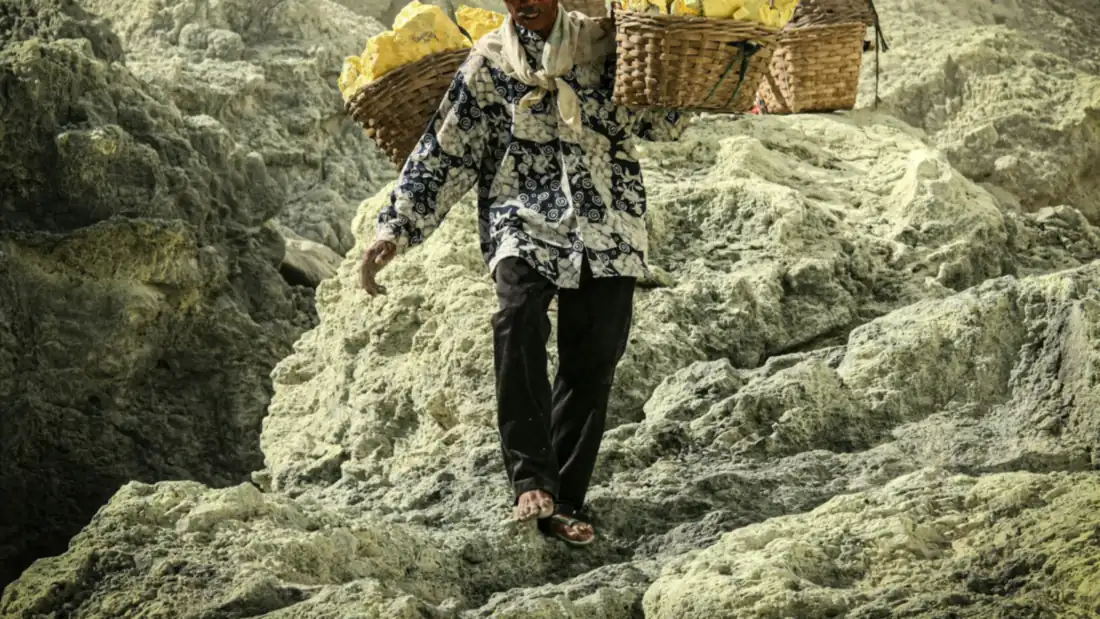
Each miner typically carries two large baskets of solidified sulfur, balanced on a bamboo pole across their shoulders. The weight of these baskets usually ranges from 70 to 90 kilograms (154 to 198 pounds) per load. To put that in perspective, imagine carrying a person on your shoulders, up and down a steep mountain, multiple times a day.
Miners are paid by the kilogram for the sulfur they deliver. While rates can fluctuate, a typical miner earns approximately IDR 1,500 to 2,000 per kilogram (last verified June 2026). This means that for a full load of 80 kg, a miner might earn IDR 120,000 to IDR 160,000 for one trip. Many miners manage one, sometimes two, full trips per day. Therefore, what do ijen sulfur miners earn on an average day ranges from roughly IDR 120,000 to IDR 320,000, which translates to approximately US$8 to US$22 per day, depending on the current exchange rate and the amount of sulfur they can carry.
This income, while higher than some agricultural wages in the region, comes at an immense physical cost. It is often the primary source of income for their families, supporting wives, children, and sometimes extended relatives. The sulfur, once weighed and purchased, is used in various industries, including sugar refining, cosmetics, pharmaceuticals, and rubber production. This global demand underpins the miners’ livelihood.
A Day in the Life: The Routine of an Ijen Sulfur Miner
The daily routine of an ijen sulfur production miners livelihood is grueling and predictable, dictated by the mountain and the market.
- Midnight Start: Many miners begin their ascent from Paltuding around midnight or 1 AM, often before the first tourists. They trek the ~3-kilometer path to the crater rim in the dark.
- Descent into the Crater: From the rim, they descend another ~800 meters into the crater itself, navigating a narrow, rocky path that becomes treacherous with sulfur gas, especially when the wind shifts.
- Extraction: At the bottom, near the active vents, they use metal bars to break off chunks of bright yellow sulfur, which hardens quickly after emerging as molten, cherry-red liquid. They then load these chunks into their baskets. This is where the blue flames are most visible, but also where gas concentrations are highest.
- Ascent from Crater: The most difficult part of the journey is climbing back up the crater wall with 70-90 kg of sulfur. This ascent is slow, deliberate, and physically punishing.
- Descent to Paltuding: Once at the rim, they begin the long, steep descent down the main trail to the weighing station at Paltuding. This is where most tourists encounter them, often offering a helping hand or a bottle of water.
- Weighing and Payment: At Paltuding, their sulfur is weighed, and they receive payment. They might then rest briefly before considering a second trip, or head home to their families.
The physical toll is immense. Many miners suffer from respiratory issues due to constant exposure to sulfur dioxide gas, as well as joint problems, back pain, and skin irritations from the sulfur dust and the sheer weight they carry. Their faces, often etched with lines of fatigue and exposure, tell a story of resilience and hardship.
Ijen Sulfur Mining Culture Tour Experience: Beyond the Spectacle
To truly appreciate Kawah Ijen, one must look beyond the blue fire and sunrise to the human story within. An ijen sulfur miners guided tour offers this perspective, providing context and fostering respectful interaction. When you choose a reputable operator like Ijen Tour Package, operated by Bali Premium Trip, you’re not just booking a trek; you’re engaging with a system that supports local livelihoods and promotes ethical tourism.
Your local guide, often an ex-miner or someone with deep connections to the mining community, plays a crucial role. They can explain the nuances of the miners’ work, share personal anecdotes, and facilitate respectful interactions. This isn’t a “culture show”; it’s an opportunity to bear witness to a unique and challenging way of life.
Ethical Visitor Code: Witnessing, Not Exploiting
The presence of tourists at Kawah Ijen has brought both opportunities and challenges for the miners. It’s vital that visitors approach this encounter with empathy and a clear code of conduct. We must avoid turning poverty into a photo opportunity or reducing these resilient individuals to mere props for our travel narratives.
Here’s how to ensure your ethical photography sulfur miners ijen and overall interaction is respectful:
- Ask Before Photographing. Always.
- This is the golden rule. A simple gesture, a nod, or a spoken “Permisi, boleh foto?” (Excuse me, may I take a photo?) goes a long way. Respect their answer if they decline. If they agree, a genuine smile and “Terima kasih” (Thank you) are essential. Remember, they are individuals, not objects.
- Support Directly: Buy Carved Sulfur Souvenirs.
- Many miners carve intricate shapes from sulfur during their downtime, selling them directly to tourists. This provides an additional, much-needed income stream. When you see a miner selling these small, yellow sculptures, consider purchasing one. It’s a direct way to support them and a unique souvenir.
- Do Not Haggle Over Prices of Souvenirs or Offerings.
- The few dollars they ask for a carved sulfur piece or a small service mean much more to them than to you. Accept the price they offer. Bargaining, which is common in many Indonesian markets, feels disrespectful in this context.
- Offer Practical Help, Not Just Money.
- While direct monetary tips are appreciated (see below), offering a bottle of water, a snack, or even a small pain relief balm can be incredibly helpful. These gestures acknowledge their physical strain and offer immediate comfort. If you offer water, ensure it’s a sealed bottle.
- Respect Their Space and Work.
- Do not impede their path. They are carrying immense weight on difficult terrain. Give them ample room to pass, especially on narrow sections of the trail. Do not touch their baskets or equipment without permission.
- Engage with Your Guide.
- Your local guide is your best resource for understanding the culture and facilitating respectful interactions. Ask them questions about the miners’ lives, their challenges, and how best to engage. This is part of the value of an ijen sulfur miners guided tour.
Ijen Porter Guide Payment and Tips: Fair Compensation
Many local men who once worked as miners now serve as porters or local guides, assisting tourists on the trek. They are invaluable for safety, navigation, and cultural insight. They know the mountain intimately, understand the gas conditions, and can communicate with other miners.
When booking your trip through Ijen Tour Package, operated by Bali Premium Trip, you can be assured that our licensed, vetted on-ground guides are paid fairly for their services. However, a personal tip for your individual guide or for miners you interact with directly is always appreciated and a thoughtful gesture.
For your dedicated local guide, a typical tip range for a well-executed Ijen trek (last verified June 2026) might be US$5-15 per person in your group, depending on the length of the tour and the level of service. For miners you engage with directly – perhaps they helped you on a steep section, or you bought a souvenir – a smaller, direct tip of IDR 10,000-30,000 (roughly US$0.70-$2.00) is a kind gesture.
This direct support, whether through purchases or tips, contributes to the ijen sulfur production miners livelihood beyond their daily wages. It acknowledges their hard work and the unique cultural experience they provide through their presence.
—
Considering a journey to Kawah Ijen? It’s more than just a hike; it’s a profound human experience. We plan and run private, expert-guided Ijen treks with our own Bali team plus licensed, vetted on-ground guides, permits, and transfers. Bookings are handled directly by the Bali Premium Trip reservations team, ensuring transparency and direct support to local communities. Let us help you plan your trip respectfully. We’re also available for WhatsApp planning to answer your questions.
—
Understanding the Sulfur Production Process
The yellow sulfur ore at Kawah Ijen is a direct result of volcanic activity. Inside the crater, powerful solfatara vents emit superheated volcanic gases, primarily sulfur dioxide and hydrogen sulfide. As these gases cool and react with oxygen, the sulfur precipitates out as a liquid, molten sulfur.
This molten sulfur, appearing bright cherry-red as it flows, quickly cools and solidifies into the bright yellow, crystalline form that miners collect. The miners strategically channel this liquid sulfur through ceramic pipes, directing it into pools where it cools and hardens more rapidly. Once solid, they break it into manageable chunks using metal bars, ready for transport. This natural process is continuous, ensuring a constant supply of sulfur for the miners to extract.
Your Visit: What to Expect on an Ijen Sulfur Miners Guided Tour
Booking an ijen sulfur miners guided tour is the smartest way to experience Kawah Ijen. Here’s what to expect:
- Expert Guidance: Your local guide, arranged by Bali Premium Trip, will meet you and lead you safely. They understand the terrain, the best times to move, and how to navigate the gas conditions.
- Safety First: You’ll be provided with gas masks – these are non-negotiable for descending into the crater and often needed even on the rim when the wind shifts. Good hiking shoes, warm layers, and a headlamp are also essential.
- The Trek: The 3-kilometer uphill trek to the rim is challenging, with an elevation gain of around 300 meters from Paltuding (approximately 1,850m above sea level) to the rim (approximately 2,150m). The path can be loose gravel and steep. The descent into the crater is even more demanding, requiring careful footing in low light and often amidst sulfur fumes.
- Blue Fire & Miners: In the pre-dawn hours (typically 2 AM to 4 AM), you’ll witness the mesmerizing blue flames. This is also when you’ll likely see the miners at work, collecting sulfur in the same area. Your guide will help you understand where to stand for safety and how to observe respectfully.
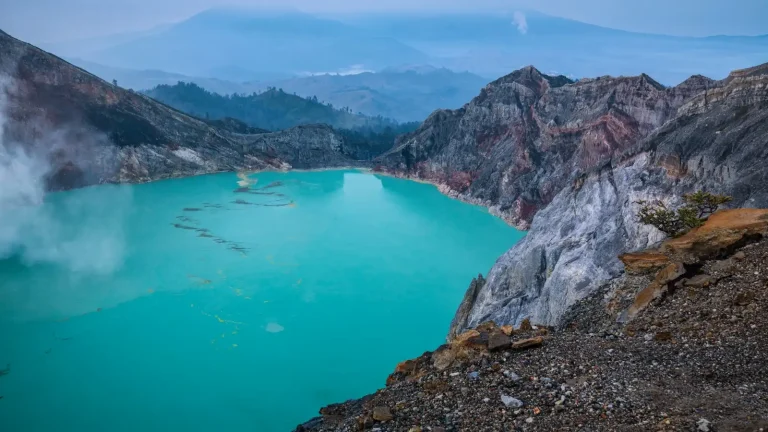
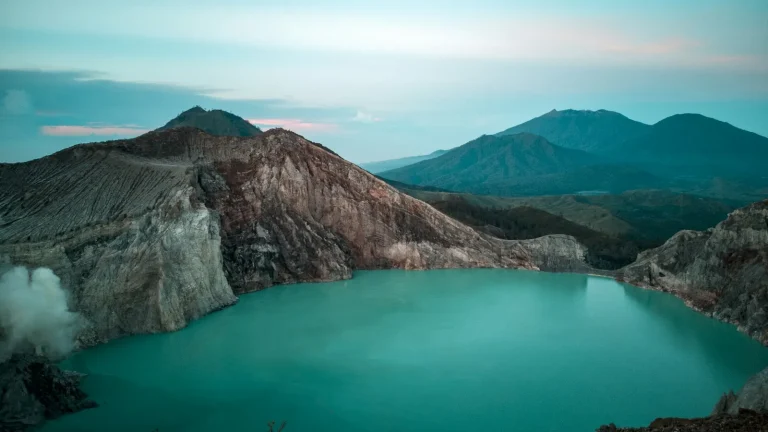
- Sunrise: After the blue fire experience, your guide will lead you to a vantage point on the rim to witness the sunrise over the turquoise crater lake – a spectacular reward for your efforts.
- The Descent: The journey back down the mountain, though easier physically, still requires attention. You’ll pass many miners making their way up with empty baskets or down with full loads.
A guided tour ensures you are prepared, safe, and equipped to engage with the natural wonder and human story of Kawah Ijen in the most responsible way. It also directly contributes to the local economy by providing employment for experienced guides and porters.
Frequently Asked Questions
Is it safe to visit the Ijen sulfur miners?
Visiting Kawah Ijen to see the sulfur miners can be safe if you take necessary precautions and are accompanied by an experienced local guide. The main risks are the challenging terrain, exposure to sulfur gas, and the physical exertion of the trek. A guide will provide gas masks, navigate the safest paths, and advise on gas conditions. Always follow your guide’s instructions.
How many sulfur miners work at Ijen Crater?
The exact number fluctuates, but typically, there are around 200 to 300 sulfur miners active at Kawah Ijen Crater on any given day. This number can vary based on demand for sulfur, weather conditions, and individual miner availability. They work in shifts, often starting their arduous journey around midnight.
What is the best way to support Ijen sulfur miners?
The best ways to support Ijen sulfur miners ethically include:
- Book with responsible operators: Choose companies like Ijen Tour Package (operated by Bali Premium Trip) that employ licensed local guides and pay fair wages.
- Purchase souvenirs directly: Buy carved sulfur pieces from the miners.
- Tip fairly: Offer a respectful tip to your guide and consider a small direct tip to miners you interact with, always avoiding haggling.
- Offer practical help: Provide bottled water or snacks.
- Respect their work: Ask permission before taking photos, give them space, and do not impede their path.
Can I really help carry the sulfur baskets?
While some tourists might feel compelled to try carrying the sulfur baskets, it’s generally not recommended. The weights (70-90 kg) are extreme, and attempting to carry them, even for a short distance, can be dangerous for you and potentially cause injury. A more helpful and respectful gesture is to offer water, a snack, or a direct tip, or simply engage with a friendly word and a genuine smile.
What do Ijen sulfur miners earn per day?
Ijen sulfur miners typically earn between IDR 120,000 to IDR 320,000 per day, which translates to approximately US$8 to US$22, based on the amount of sulfur they carry (around IDR 1,500-2,000 per kilogram) and the number of trips they complete. This figure is an estimate and can vary with market rates and exchange rates (last verified June 2026).
—
The Kawah Ijen experience is transformative. It pushes your physical limits, rewards you with natural beauty, and, most importantly, offers a window into immense human resilience. By choosing an ethical ijen sulfur miners tour banyuwangi and approaching the miners with respect and empathy, you ensure your visit is not just a journey for yourself, but a positive interaction for the local community. We are here to help you navigate this incredible journey responsibly.
Ready to plan your mindful journey to Kawah Ijen? Let our Bali Premium Trip team handle the details, ensuring a safe, respectful, and insightful experience. Plan your trip with us today, or connect via WhatsApp for personalized planning advice.