Uncategorized
What to Expect on an Ijen Tour — A First-Timer’s Complete Guide
Prepare for your Ijen crater tour: what to expect hour-by-hour. Our honesty-first guide covers the midnight trek, blue fire, sulfur gas, and essential tips
An ijen crater tour what to expect is a question I hear often, and it’s a good one. For first-timers, the reality of a midnight trek to Kawah Ijen can be a surprising mix of awe-inspiring natural phenomena and significant physical challenge. I’ve walked the rim of Ijen more than a hundred times, in every season, under clear stars and through thick fog. This guide will walk you through exactly what your night will look like, so nothing catches you off guard.
Kawah Ijen is an active volcano on Java, rising to 2,799 meters (9,183 feet) above sea level. It’s famous for two things: the electric-blue flames that emerge from burning sulfuric gas at night, and its vast, turquoise acidic crater lake, the largest of its kind in the world. Seeing both requires a very early start and a willingness to push your limits. We plan and run private, expert-guided Ijen treks with our own Bali team plus licensed, vetted on-ground guides, permits, and transfers, with bookings handled directly by the Bali Premium Trip reservations team. We want you to be fully prepared.
Why the Midnight Start? Understanding the Ijen Blue Fire Phenomenon
The first thing that surprises many travelers is the truly disorienting ijen night trek start time wake up early. You’ll likely be roused from sleep around 11 PM or midnight, depending on your accommodation location in Banyuwangi. If you’re coming from Bali, your journey will have started even earlier that day. This isn’t for dramatic effect; it’s purely pragmatic.
The blue fire is the main draw for many, and it’s a spectacle of nature. It’s not lava; it’s ignited sulfuric gas. This gas, emerging from cracks in the volcano at high pressure and temperature, burns with an ethereal blue flame when it meets oxygen. Crucially, this phenomenon is only visible in full darkness. As soon as the first hint of dawn lightens the sky, the flames fade from view.
This explains ijen midnight start time 1am why. To reach the blue fire deep inside the crater and experience it before sunrise, you must begin your hike from the Paltuding ranger post, the official starting point, between 1:00 AM and 2:00 AM. This timing allows for the ~1.5 to 2-hour ascent to the crater rim, plus the ~30-45 minute descent into the crater itself, all while the sky is still completely dark.
Your journey will likely begin with a drive from your accommodation in Banyuwangi to Paltuding, which takes about 1.5 hours. Expect winding roads and cool mountain air. The ranger post itself is basic, with restrooms and a small warung (local eatery) that might be open for coffee or tea. This is where you’ll meet your local guide, if you haven’t already, and make final preparations. Headlamps on, backpacks adjusted, and the anticipation builds.
The Ascent to the Crater Rim: What Your Body and Lungs Are In For
When you begin your ijen crater tour first timer beginner trek from Paltuding, the world around you will be absolute darkness, broken only by the beams of headlamps bobbing along the trail. The initial path is wide but quickly narrows and begins to climb. This is the main ijen crater walk what to expect for the first leg of your journey.
The trail to the crater rim is approximately 3 kilometers (1.8 miles) long. While that might not sound far, it’s the consistent uphill grade and the varied terrain that make it challenging. You’ll gain about 800 meters (2,625 feet) in elevation during this stretch.
Here’s a breakdown of the terrain and effort:
- First 1.5 km: This section is the steepest. It’s a relentless, continuous climb up a well-defined but sometimes sandy and loose path. You’ll be breathing hard, and your leg muscles will feel the burn. The darkness can be disorienting, making it hard to judge distances or see upcoming obstacles.
- Mid-section: The trail offers a brief reprieve with a flatter, more undulating stretch. This is a good spot to catch your breath, sip some water, and perhaps even glance up at the stars if the sky is clear.
- Final 1 km: The climb resumes, though perhaps not as brutally steep as the initial push. The path becomes rockier and more exposed as you approach the rim. You might start to feel the effects of altitude – a slight shortness of breath or a mild headache.
Most people take between 1.5 to 2 hours to reach the crater rim, depending on their fitness level and the pace of their group. Your guide will set a sensible pace, encouraging breaks. Don’t be afraid to ask for them. This isn’t a race.
Sensory Experience:
- Darkness: It’s profound. Your headlamp is your world. Peripheral vision is minimal.
- Cold: At 2,000+ meters, temperatures can drop significantly, especially in the early hours of the morning. Expect anything from 5-10°C (40-50°F), sometimes even colder with wind chill. Layers are crucial.
- Sounds: The rhythmic crunch of boots on gravel, the occasional whisper of wind, and the sound of your own breathing. You might hear distant shouts from other groups or the unique calls of the sulfur miners.
- Smell: As you get closer to the rim, you’ll start to detect a faint, metallic sulfuric smell in the air. This is a precursor to what’s to come.
Many people are surprised by the sheer number of trekkers on the trail. Even at 1 AM, there’s a steady stream of headlamps, creating a “human centipede” effect up the mountain. This is why having a good guide is important – they help navigate the crowds and maintain safety. You might also encounter local sulfur miners pulling their carts, often offering rides for a fee. While it’s tempting, remember these miners are doing incredibly difficult work, and a simple “thank you” or respectful nod is often appreciated more than a transaction.
Descending into the Crater: The Blue Fire Up Close (and the Sulfur Gas)
Once you reach the crater rim, usually around 3:00 AM to 3:30 AM, the air becomes thick with the smell of sulfur. This is where your ijen night blue fire trek itinerary takes a dramatic turn. After a brief pause, your guide will lead you to the descent path into the crater.
This path is approximately 800 meters (0.5 miles) long, but it feels much longer. It’s steep, often with loose rocks and uneven footing. In the dark, even with a headlamp, judging the terrain is challenging. This section is often congested, with trekkers both descending and ascending. Patience is key.
The Role of the Gas Mask:
Your guide will ensure you put on your gas mask before starting the descent. This is non-negotiable. The closer you get to the blue fire, the more concentrated the sulfuric gas becomes. The gas is irritating to the eyes and respiratory system, causing coughing, tearing, and a burning sensation. While short exposure isn’t typically dangerous for healthy individuals, prolonged or intense exposure without a mask is highly uncomfortable and can be harmful. The masks provided by our tours are industrial-grade and effective. Do not skimp on this.
At the Blue Fire:
The blue fire itself is mesmerizing. You’ll see streams of luminous blue flames dancing from vents in the rock. It’s not a vast, all-encompassing fire; rather, it’s localized pockets of combustion. Your guide will take you to a safe viewing point, mindful of wind direction which can suddenly shift and blow gas directly into your path.
This is also where you’ll see the sulfur miners working in truly extraordinary conditions. They chip away at the solidified sulfur deposits, loading large baskets which they then carry out of the crater and up the mountain – often weighing 70-90 kg (150-200 lbs) per load. Witnessing their arduous labor is a humbling experience. Give them space, respect their work, and do not block their paths.
You’ll spend about 30-45 minutes down in the crater, long enough to experience the blue fire and observe the miners, but not so long that gas exposure becomes a significant issue. Your guide will monitor the gas levels and the wind, ensuring your safety.
Sunrise on the Rim: The Turquoise Lake Reveals Itself
After experiencing the blue fire, your guide will lead you back up the steep, rocky path to the crater rim. This ascent from the crater floor, though shorter, can feel just as strenuous as the initial climb to the rim, especially after inhaling some sulfur and expending energy.
As you reach the rim for the second time, the sky will begin to lighten, signaling the approach of sunrise. Most people aim to be back on the rim by 5:00 AM to 5:30 AM. Find a good vantage point. As the sun slowly peeks over the horizon, usually between 5:30 AM and 6:00 AM, the most dramatic reveal of your entire ijen crater walk what to expect experience takes place.
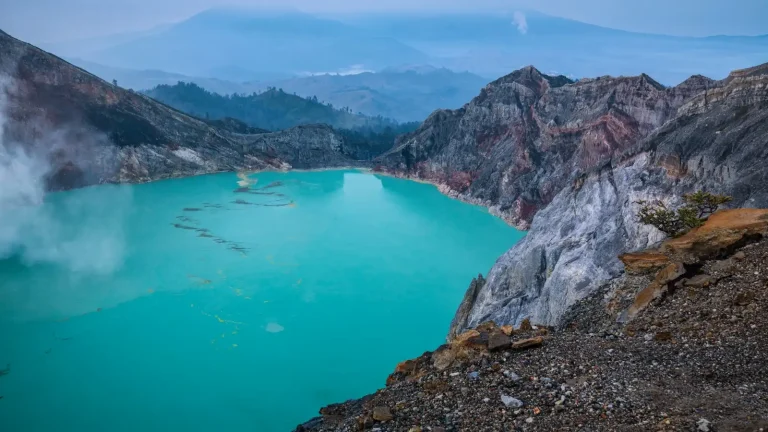
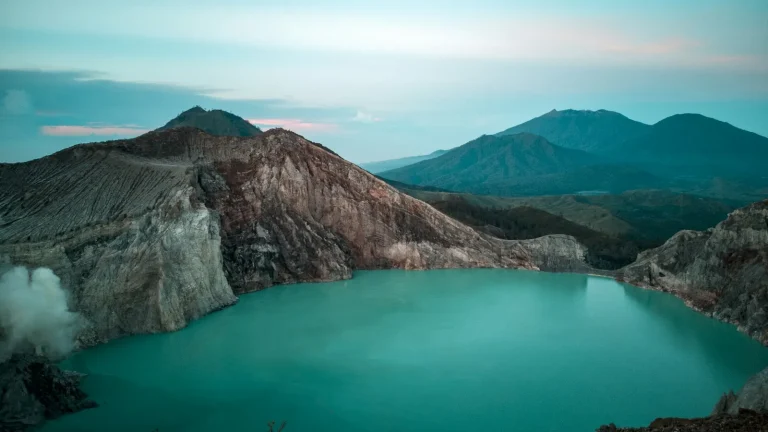
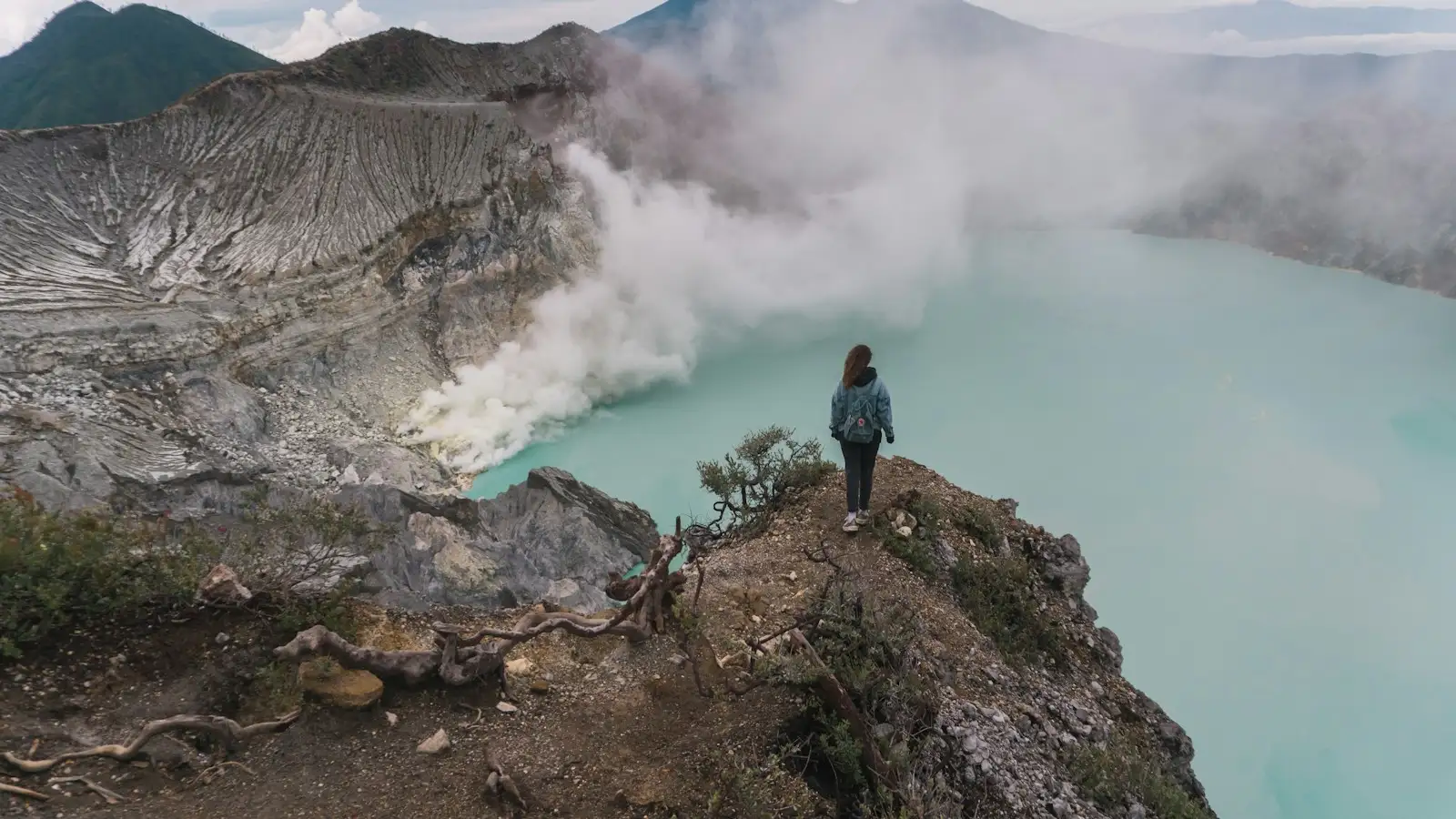
The darkness recedes, and the vast, otherworldly Kawah Ijen crater lake comes into view. The color is what truly captivates: an intense, almost unreal turquoise. This vivid hue is due to the lake’s high acidity and concentration of dissolved minerals. It’s a stark contrast to the black volcanic rock, the white-yellow sulfur deposits, and the often-steaming vents.
This is a moment of profound beauty and a stark reminder of the raw power of nature. The air, though still carrying a hint of sulfur, feels cleaner, and the panoramic views are expansive. You’ll have ample time for photos and to simply soak in the landscape. Your guide can point out specific features and share more about the volcano’s geology.
The Walk Back Down: Different Scenery, Different Challenge
After sunrise, with the full glory of the crater lake etched into your memory, it’s time for the descent back to Paltuding. This part of the ijen tour what to expect is entirely different from the ascent. What was once a pitch-black path is now revealed in daylight.
You’ll see the rolling hills, distant peaks, and the surrounding lush vegetation. The trail, however, remains challenging. The same steep, sandy, and rocky sections that were difficult to climb in the dark are now tricky to descend. It’s easy to slip, especially if you’re tired.
Descent Challenges:
- Knee Impact: The continuous downhill can be hard on your knees.
- Loose Footing: Be mindful of loose gravel and small rocks, which can cause you to slide.
- Fatigue: By this point, you’ve been awake for many hours and have exerted significant physical effort. Tiredness can lead to less careful footing.
Take your time. Use trekking poles if you have them. Your guide will continue to assist, pointing out safer paths and ensuring everyone descends safely. This is also a good opportunity to appreciate the scenery you missed in the dark. You’ll see the terrain, the trees, and the occasional wildlife that call this mountain home.
Upon reaching Paltuding, usually around 8:00 AM to 9:00 AM, you’ll feel a sense of accomplishment. There are basic facilities here, and usually, a hot drink or a simple breakfast awaits. From Paltuding, your driver will take you back to your accommodation for a much-deserved rest.
Common Ijen Crater Tour Mistakes to Avoid
Even with the best intentions, first-timers often make a few key errors. Knowing these ijen crater tour mistakes avoid common errors can significantly improve your experience.
- No Headlamp or Inadequate Light
- A small phone flashlight is insufficient. You need a proper headlamp to illuminate the trail, keep your hands free, and navigate the crowds safely. Many tours provide basic headlamps, but bringing your own bright, reliable one is recommended.
- Wrong Footwear
- Flip-flops, sandals, or fashion sneakers are a recipe for disaster. You need sturdy, closed-toe hiking shoes or boots with good grip and ankle support. The trail is loose, rocky, and steep, especially during the descent into the crater.
- Skipping the Gas Mask
- Some visitors try to skip the mask, thinking they’ll be fine. The sulfur gas is extremely irritating. A good, industrial-grade gas mask is essential for the crater descent. If your tour doesn’t explicitly mention providing one, ask. Ours always do.
- Underestimating the Cold and Altitude
- Ijen is a mountain. It gets cold. Very cold. And it’s high altitude. Many arrive in light clothing, expecting tropical warmth. Layering is critical: base layer, fleece, waterproof outer jacket, hat, and gloves. Altitude sickness can also affect some people, causing headaches or nausea. Pace yourself.
- Booking Too Tight a Bali Day-Trip Itinerary
- Attempting Ijen as a direct day trip from Bali is possible but incredibly grueling. It involves hours of driving, a ferry crossing, a midnight hike, and then the return journey. You’ll be exhausted. We highly recommend a 2-day, 1-night tour from Bali, allowing for some rest in Banyuwangi before and after the trek.
- Not Carrying Water and Snacks
- The trek is physically demanding. You’ll sweat. Bring at least 1-1.5 liters of water per person. High-energy snacks like nuts, energy bars, or fruit are also advisable to keep your energy levels up.
- Ignoring Guide’s Instructions
- Your local guide knows the mountain, the gas conditions, and the safest paths. Listen to them. They are there for your safety and to enhance your experience. Wandering off or ignoring warnings can be dangerous, especially in the crater.
Essential Gear for Your Ijen Midnight Start
Being well-prepared makes all the difference for your ijen midnight start time 1am why adventure. Here’s a quick checklist of what to bring:
| Item | Why It’s Essential | Notes |
|---|---|---|
| Headlamp | Navigating in absolute darkness; keeping hands free. | Bring spare batteries or a fully charged power bank. |
| Warm Layers | Temperatures drop significantly at altitude. | Base layer, fleece/sweater, windproof/waterproof jacket. |
| Hiking Shoes/Boots | Protection, grip, and ankle support on uneven terrain. | No sandals or light sneakers. |
| Gas Mask | Protects from irritating sulfur fumes in the crater. | Typically provided by reputable tours; confirm in advance. |
| Water | Stay hydrated during the strenuous hike. | At least 1-1.5 liters per person. |
| Snacks | Maintain energy levels. | Energy bars, fruit, nuts are good choices. |
| Small Backpack | To carry water, snacks, extra layers, and personal items. | Keep it light. |
| Hat & Gloves | Crucial for warmth at the cold summit. | Especially important for sunrise viewing. |
| Camera | Capture the blue fire and sunrise views. | Protect from dust/sulfur; fully charged battery. |
Remember, packing light but smart is key. You’ll be carrying this gear up a mountain in the middle of the night.
Is an Ijen Crater Tour Right for You? Knowing Your Limits
I’ve been honest about the difficulty of an Ijen trek. It’s not a casual stroll. It requires a reasonable level of physical fitness and good health.
- Physical Fitness: You should be comfortable walking uphill for extended periods, navigating uneven terrain, and descending steep, rocky paths. Regular exercise, especially walking or hiking, will prepare you well.
- Respiratory/Heart Conditions: Due to the altitude and the presence of sulfur gas, individuals with severe asthma, heart conditions, or other respiratory illnesses should consult their doctor before attempting this trek. Even with a gas mask, the air quality can be challenging.
- Altitude Sickness: While not as high as some other peaks, Kawah Ijen’s altitude can still cause mild altitude sickness symptoms like headaches, nausea, or dizziness in some individuals. Staying hydrated and pacing yourself helps.
- Mental Fortitude: The midnight start, the darkness, the cold, and the sulfur gas can be mentally taxing. A positive attitude and willingness to push through discomfort are helpful.
This isn’t medical advice, but rather an honest assessment from someone who knows the mountain intimately. Know your limits. If you have any health concerns, please consult a medical professional.
Planning Your Private Ijen Tour with Bali Premium Trip
Understanding ijen crater tour what to expect is the first step. The next is planning your trip with people who prioritize your safety and experience. At Ijen Tour Package, operated by Bali Premium Trip (founded 2015, Kuta, Bali), we specialize in private, expert-guided Ijen treks. We don’t just book you onto a third-party tour; we plan and run these trips ourselves with our own Bali team, leveraging our extensive network of licensed, vetted on-ground guides, permits, and transfers.
This means when you book with us, you book directly with our Bali Premium Trip reservations team at transparent, published rates with no third-party markup. We arrange all necessary services, from comfortable transfers to experienced local guides and park permits, ensuring a seamless and reliable experience. Our goal is to provide you with a deep, authentic, and safe encounter with Kawah Ijen.
A typical 2-day, 1-night private Ijen tour from Bali, including all transfers, ferry tickets, accommodation in Banyuwangi, local guide, permits, and gas mask rental, typically ranges from US$300-600 per person (last verified June 2026, prices vary by season and group size). This indicative range ensures you have a private vehicle and a dedicated guide for a more personalized experience.
Ready to see the blue fire and the turquoise lake for yourself, with the confidence of an expertly planned trip? Let us help you plan your ideal Ijen adventure.
Plan your trip to Kawah Ijen with our expert team, or reach out via WhatsApp for personalized planning.
Frequently Asked Questions
What’s the best time of year to visit Ijen?
The dry season, from May to September, is generally considered the best time to visit Kawah Ijen. During these months, skies are clearer, and the chances of rain are lower, offering better visibility for the blue fire and sunrise views. The rainy season (October to April) is still possible, but you might encounter fog, heavier rain, and muddier trails.
How difficult is the Ijen trek?
The Ijen trek is moderately difficult. The main challenge comes from the steep, continuous uphill climb in the dark (approximately 3 km with 800m elevation gain) and the subsequent steep, rocky descent into the crater (around 800m). A reasonable level of fitness is required, and sturdy hiking shoes are essential. It’s not a technical climb, but it is physically demanding.
Do I need a guide for Ijen?
Yes, while technically not mandatory for the main trail to the rim, descending into the crater and gas is dangerous without a licensed local guide. Guides provide crucial safety oversight, navigate the best paths in the dark, monitor gas conditions, and share insights into the volcano and the miners’ lives. We strongly recommend booking a tour with a vetted local guide.
Is Ijen safe?
Kawah Ijen is an active volcano, so safety is paramount. When guided by experienced professionals and following all instructions (especially regarding gas masks and staying on designated paths), the trek is generally safe. The primary hazards are the steep, uneven terrain (risk of falls) and the sulfuric gas in the crater. Reputable tour operators like Bali Premium Trip prioritize safety by providing licensed guides and proper equipment.
What should I wear for the Ijen trek?
Wear layers! It gets very cold at night and at altitude (5-10°C / 40-50°F). Start with a base layer, add a warm fleece or sweater, and a windproof/waterproof outer jacket. Long pants, a hat, and gloves are highly recommended. Most importantly, wear sturdy, closed-toe hiking shoes with good grip and ankle support. Avoid cotton layers if possible, as they retain moisture and can make you colder.
If you have more questions or are ready to plan your journey, our Bali Premium Trip reservations team is here to help. We’ll ensure you’re fully prepared for an incredible and safe Kawah Ijen experience.
Contact us today to start planning your personalized Ijen tour. You can also connect with us directly on WhatsApp for quick answers and seamless planning.